
If your face looks shorter, sunken, or older than it used to, your teeth may play a role. Worn, missing, or damaged teeth can reduce the support that holds up your lips and cheeks. When your bite changes, your lower face can change with it.
Full mouth reconstruction can change your facial structure by restoring lost tooth height, replacing missing teeth, and rebuilding your bite to better support your lips and cheeks.
Full mouth rehabilitation focuses on strength and function, but it can also improve facial balance. By rebuilding the structure inside your mouth, you help restore support on the outside.
You may notice subtle changes like improved lip support or a more even jaw position. The results depend on your bone, teeth, and overall facial shape.
When you understand how teeth affect facial structure, you can see why a complete approach often makes the biggest difference.
Key Takeaways
- Rebuilding worn or missing teeth can improve facial support and balance.
- Restoring bite height may help correct a shortened or sunken lower face.
- Long-term results depend on careful planning, treatment, and ongoing care.
Table of Content
- The Relationship Between Teeth and Facial Structure
- Transformative Effects of Full Mouth Rehabilitation
- Modern Approaches and Technologies in Reconstruction
- Treatment Procedures and Customization
- Long-Term Outcomes and Maintenance
- Frequently Asked Questions
The Relationship Between Teeth and Facial Structure
Your teeth do more than help you chew. They support your lips and cheeks, keep your bite aligned, and help your lower face keep its natural height and shape.
How Teeth Support Facial Contours
Your teeth act like small pillars inside your mouth. They hold up your lips and give shape to your cheeks.
When you have a full set of teeth, they support the soft tissues around your mouth. This support keeps your face from looking sunken. It also helps your lips rest in a natural position.
The roots of your teeth also stimulate the jawbone when you chew. This pressure helps keep the bone strong and stable. If you lose that stimulation, the bone can shrink over time.
Replacing teeth with options that restore both the crown and root, such as implants that help preserve bone and cheek support, can help maintain your natural facial contours.
Good occlusion and proper bite alignment also keep your jaw joints balanced. When your bite fits together well, your facial muscles work evenly and your face appears more symmetrical.
Consequences of Tooth Wear and Loss
Tooth wear and tooth loss change more than your smile. They can slowly change your face.
When teeth wear down, they become shorter. This reduces the height of your lower face. Over time, your jaw may shift forward or rotate, which can change your profile.
Missing teeth create gaps that allow nearby teeth to drift. This movement affects your bite alignment and chewing efficiency. You may chew on one side more than the other, which strains muscles and joints.
Extensive tooth loss can also affect facial structure. It can lead to bone loss and changes in jaw position.
You may notice:
- Thinner lips
- Deeper lines around the mouth
- A shorter distance between your nose and chin
These changes often happen gradually, but they directly relate to changes in dental health and support.
Vertical Dimension of Occlusion and Facial Appearance
Your vertical dimension of occlusion (VDO) refers to the height between your upper and lower jaws when your teeth touch. This measurement plays a key role in how your lower face looks.
If tooth wear or long-term tooth loss reduces this height, your chin moves closer to your nose. Your lips may fold inward, and your face can appear collapsed.
A collapsed bite also affects how your teeth meet. Poor occlusion may cause jaw strain, uneven muscle activity, and reduced chewing efficiency.
Full mouth reconstruction often focuses on restoring lost bite height and facial support. By rebuilding worn or missing teeth, dentists can improve strength, function, and facial balance.
When your VDO is restored correctly, your face regains proper proportions. Your jaw muscles relax into a healthier position, and your profile looks more balanced and natural.
Transformative Effects of Full Mouth Rehabilitation
Full mouth reconstruction changes more than your teeth. It rebuilds the structure that supports your lips, cheeks, and jaw while improving how you bite and chew.
Restoring Facial Volume and Support
When you lose teeth or wear them down, your face can look shorter or sunken. Your lips may lose support, and deep lines can form around your mouth.
Full mouth rehabilitation restores this lost support. A prosthodontist uses dental implants, dental crowns, dental bridges, or dentures to rebuild missing teeth and stabilize your bite.
Implants help preserve jawbone, which supports your lower face over time.
Treatment also restores your vertical dimension of occlusion, which is the height between your upper and lower jaws when your teeth touch. If this height has collapsed, your chin may move closer to your nose.
By rebuilding worn teeth and replacing missing ones, full-mouth reconstruction can lengthen the lower face to a natural position.
Improved Bite Alignment and Function
A damaged bite does more than affect your smile. It can cause jaw strain, uneven tooth wear, and poor chewing efficiency.
Full mouth reconstruction corrects how your upper and lower teeth meet. Your dentist may combine orthodontics, crowns, bridges, and implants to create stable contact across your bite. This balance spreads pressure evenly when you chew.
When your bite aligns correctly:
- You chew food more efficiently
- Your jaw joints move in a smoother path
- Your teeth experience less uneven wear
A stable bite also helps protect new restorations. By restoring proper bite height and alignment, full mouth rehabilitation supports both function and comfort in daily life.
Smile Makeover and Aesthetic Benefits
Full mouth rehabilitation often includes a complete smile makeover. Your dentist shapes and positions each tooth to match your facial features and proportions.
Treatments may include:
- Veneers to improve color and shape
- Dental crowns to rebuild damaged teeth
- Dental implants or bridges to replace missing teeth
- Modern dentures for full-arch replacement
These changes do more than whiten teeth. They restore symmetry, improve tooth display when you speak, and support your lips at rest.
Digital planning tools can combine facial and dental scans to guide treatment. This approach helps align your new teeth with your facial structure.
When your teeth fit your face and function well together, your smile looks balanced and feels natural.
Visit our office in Las Vegas, NV to learn more about the benefits of full mouth reconstruction.
Modern Approaches and Technologies in Reconstruction
Modern full mouth reconstruction relies on digital scans, computer-guided design, and detailed treatment planning.
These tools help you see expected changes in tooth position, bite height, and facial balance before treatment begins.
Digital Dentistry and Imaging
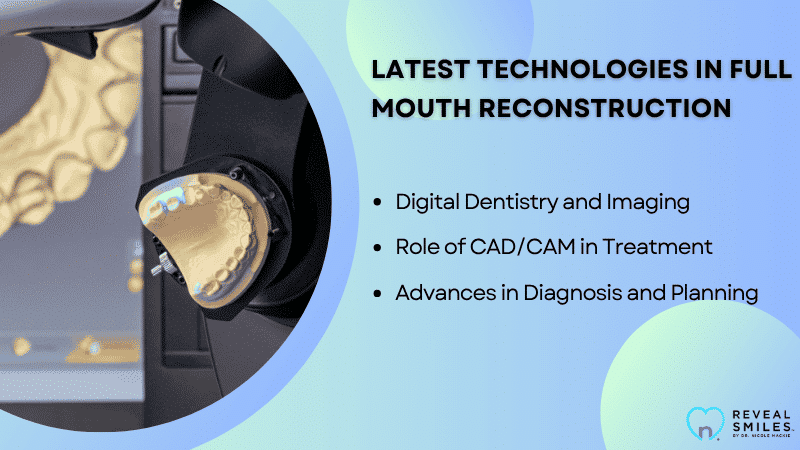
Digital dentistry replaces messy impressions with intraoral scanners that capture clear 3D images of your teeth and gums. These scans show worn edges, collapsed bite height, and uneven tooth surfaces that affect your lower face.
Many dentists now combine dental scans with facial scans. This matters when rebuilding lost vertical dimension, which supports your lips and cheeks.
You may also see:
- CBCT scans for bone shape and jaw position
- Digital photos to study smile line and lip support
- Virtual bite analysis to measure how your teeth meet
These tools improve diagnosis and reduce guesswork. You get a clearer plan, and your dentist can adjust the design before any permanent work begins.
Role of CAD/CAM in Treatment
CAD/CAM stands for computer-aided design and computer-aided manufacturing. In restorative dentistry, this technology designs and mills crowns, bridges, and implant restorations with high precision.
Your dentist first creates a digital model of your mouth. Then CAD software designs the shape, size, and position of each tooth. CAM systems mill restorations from materials like zirconia or ceramic based on that design.
This process allows:
- Better control of tooth length and width
- Accurate bite relationships
- Consistent contours that support your lips
When your dentist adjusts the virtual design, you can often preview the proposed changes before final placement.
That preview helps you understand how restored teeth may change your smile and lower facial height.
Advances in Diagnosis and Planning
Careful diagnosis drives successful treatment planning. In full mouth reconstruction, your dentist evaluates worn teeth, jaw position, muscle comfort, and bone levels before choosing a plan.
Computer-assisted methods now support complex cases. While not every case needs surgery, these tools help when jaw alignment affects facial structure.
Digital planning lets you test changes in:
- Vertical dimension (the space between your upper and lower jaws)
- Tooth position and angulation
- Implant placement and depth
You can often review a digital mock-up or temporary restorations before final treatment. This step lets you confirm comfort, speech, and facial support.
With modern diagnosis and planning, you take part in shaping both your smile and your facial profile.
Treatment Procedures and Customization
Full mouth reconstruction uses specific procedures to rebuild your bite and support your facial structure. Your dentist selects each treatment based on bone support, tooth damage, and how your jaws fit together.
Selecting the Right Restoration Options
You need restorations that match both your bite forces and facial support needs. The right mix of treatments helps restore lost height in your lower face and stabilize your jaw position.
A full mouth reconstruction may include dental crowns, bridges, veneers, dental implants, or dentures. Each option serves a clear purpose.
- Dental crowns cover weak or broken teeth and restore their shape and height.
- Dental bridges replace one or more missing teeth using nearby teeth for support.
- Dental implants replace missing tooth roots and help preserve jawbone.
- Dentures replace several or all teeth when many are missing.
- Veneers improve the front teeth when damage is mild and structure remains strong.
If you have multiple missing teeth, implants often provide better bone support than removable dentures. When teeth remain but show heavy wear, crowns can rebuild lost length and improve facial balance.
Your dentist chooses materials and designs that match your bite strength and cosmetic goals. The focus stays on restoring function first, then refining appearance.
Individualized Treatment Planning
Your treatment planning process begins with detailed records. Your dentist takes digital scans, X-rays, and photos to study your bite and jaw alignment.
Full mouth reconstruction is a custom, multi-step process that restores oral function and structure.
You may need treatment in phases:
- Disease control – treat decay or gum disease.
- Bite stabilization – adjust jaw position if needed.
- Tooth replacement or restoration – place implants, crowns, or bridges.
- Final refinements – adjust shape and spacing.
If your bite has shifted, your dentist may test a temporary design before placing final restorations. This step allows you to check comfort, speech, and chewing.
Careful planning protects your jaw joints and helps your facial muscles adapt to the new bite position.
Coordination of Specialist Care
Full mouth reconstruction often requires a team. A prosthodontist usually leads complex cases because they specialize in rebuilding and replacing teeth.
You may also work with:
- A periodontist for gum and bone health
- An oral surgeon for dental implants
- An orthodontist to reposition teeth before final restorations
Orthodontics can move teeth into better alignment so crowns and bridges fit correctly. Straightening teeth first often improves long-term stability.
In more advanced cases, especially when major damage affects many teeth, doctors combine restorative and surgical procedures.
Clear communication between specialists keeps your bite balanced and your facial structure properly supported. You benefit from a coordinated plan that protects both function and appearance.
Long-Term Outcomes and Maintenance
Full mouth reconstruction can restore facial support, improve your bite, and protect your jaw. Long-term success depends on daily care, protection against tooth wear, and regular professional monitoring.
Maintaining Oral Health After Reconstruction

After reconstruction, your daily habits protect your investment. You need steady maintenance to keep your gums and restorations healthy.
Brush twice a day with a soft toothbrush and fluoride toothpaste. Clean around crowns, bridges, or implant restorations with floss, floss threaders, or water flossers. Plaque can still build up around artificial teeth.
If you received implant-supported restorations, long-term success depends on routine care and monitoring. Regular professional checks help catch small problems early.
Healthy gums support facial structure. If gum disease develops, you can lose bone around teeth or implants. That bone loss can affect your bite and facial shape.
Preventing Tooth Wear and Future Issues
Reconstruction often corrects severe tooth wear, bite collapse, or missing teeth. You must protect that new bite from damage.
If you grind or clench your teeth, also called bruxism, your dentist may give you a night guard. Wear it as directed. Grinding can crack crowns, chip porcelain, and strain implants.
Avoid chewing ice, hard candy, or non-food items. Limit very sticky foods if you have bridges or implant-supported prostheses.
Full mouth rehabilitation rebuilds your bite to improve chewing and facial support. That improved bite works best when you avoid habits that overload it.
Restorative dentistry can last many years, but it does not make you immune to wear. Smart daily choices reduce the need for repairs.
Importance of Ongoing Check-Ups
You should see your dentist at least twice a year, or more often if advised. These visits protect both your dental health and your facial structure.
During check-ups, your dentist will:
- Check the fit and stability of crowns, bridges, or implants
- Look for early signs of gum disease or bone loss
- Adjust your bite if pressure points develop
- Inspect for cracks, loosening screws, or worn materials
Small bite changes can shift how forces spread across your teeth. If ignored, they can lead to uneven wear or joint strain.
Professional cleanings also remove hardened plaque that you cannot remove at home. Consistent follow-up keeps your reconstruction stable and supports the facial improvements you gained from treatment.
Frequently Asked Questions
Full mouth reconstruction can change how your jaw, lips, and cheeks look by restoring lost tooth height and support.
When your dentist rebuilds your bite, it can also improve facial balance and reduce a sunken appearance.
Can rebuilding all my teeth change the shape of my jawline or chin?
Yes, it can.
When teeth wear down or go missing, your bite can collapse. This may shorten the lower part of your face and make your chin look closer to your nose.
A comprehensive treatment such as full mouth reconstruction to restore facial support and function can rebuild proper bite height. When your dentist restores that height, your jawline and chin may look more defined.
How does restoring my bite affect facial symmetry and overall balance?
Your bite guides how your upper and lower jaws meet. If it shifts, your face can look uneven.
A customized plan that considers your bite, bone structure, and facial symmetry helps bring your jaws back into better alignment. This careful planning is part of a full mouth reconstruction that evaluates bite and facial symmetry.
When your bite feels balanced, your lower face often looks more even from side to side.
Will my lips and cheeks look fuller after dental reconstruction?
They can.
Missing teeth and bone loss reduce support for your lips and cheeks. This may cause a hollow or sunken look.
By rebuilding teeth and, in some cases, placing implants, your dentist restores structure under the soft tissues. Many patients notice subtle fullness after full mouth reconstruction that restores function and appearance.
How long does it take to notice facial changes after the treatment is finished?
You may see some changes right after your final restorations are placed.
If your treatment includes surgery, swelling can last for several days. The early healing stage after full mouth reconstruction recovery often involves mild swelling and soreness.
As swelling fades and your muscles adjust to the new bite, your facial shape becomes clearer over a few weeks.
Are facial changes from reconstruction permanent, or do they shift over time?
The changes can last for many years if your restorations stay stable.
Your dentist designs reconstruction to rebuild long-term oral health, not just appearance.
Still, normal aging and wear can slowly affect your face over time. Regular checkups help protect your results.
What factors decide how much my face might change—like bone loss, bite height, or missing teeth?
Several factors shape your results.
Severe bone loss, many missing teeth, and major bite collapse often lead to more visible facial changes after treatment. Restoring lost vertical height can lengthen the lower face and improve chin position.