
If you’ve been wearing dentures and wondering about a more stable option, you’re not alone. Many people who rely on removable dentures eventually explore whether they can make the switch to something more permanent.
Yes, you can often replace dentures with permanent dental implants, even if you’ve been wearing dentures for many years.
The process involves placing titanium posts into your jawbone that support fixed teeth, giving you a solution that doesn’t slip, doesn’t require adhesives, and functions much like natural teeth.
The transition from dentures to implants requires an evaluation of your oral health and bone structure. Your dentist will determine if you have enough bone to support implants or if you might need additional steps first.
Understanding the differences between permanent dentures and implants can help you decide which option fits your lifestyle and goals best.
Key Takeaways
- Most denture wearers can switch to permanent dental implants regardless of how long they’ve worn dentures
- Dental implants provide better stability and comfort without the need for adhesives or daily removal
- The transition process includes an evaluation to check bone health and may require bone grafting in some cases
Schedule your consultation in Las Vegas, NV to see if you qualify for implants after dentures.
Can Dentures Be Replaced With Permanent Implants?
Most people who wear dentures can switch to dental implants, even after years of using removable teeth. Your bone health and overall oral health determine which implant options work best for your situation.
Eligibility for Replacing Dentures With Implants
You can replace dentures with dental implants regardless of how long you’ve worn them. Many denture wearers successfully make this transition after decades without natural teeth.
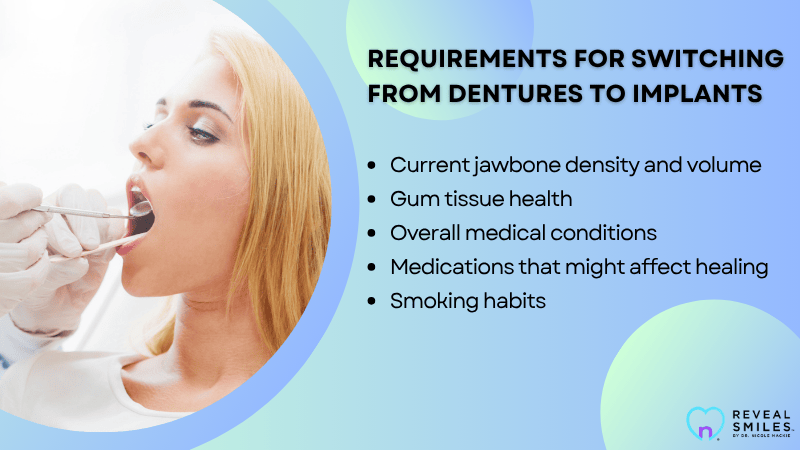
Your dentist will check several factors during your evaluation:
- Current jawbone density and volume
- Gum tissue health
- Overall medical conditions
- Medications that might affect healing
- Smoking habits
Having worn dentures for a long time doesn’t automatically disqualify you. Modern dental technology makes it possible for nearly all denture wearers to become candidates for permanent teeth. Even if you’ve experienced bone loss, treatment options exist to help you qualify.
How Jawbone Health Impacts Implant Options
Your jawbone naturally shrinks when you wear dentures because there’s no tooth root to stimulate it. This bone loss affects how implants are placed and which type works for you.
Significant bone loss may require bone grafting before you can get implants. This procedure adds material to thin or soft areas of your jaw. The grafting creates a stronger foundation and can extend your treatment time by several months.
Some patients maintain enough bone to proceed with implants right away. Your dentist will use X-rays or CT scans to measure your current bone structure. The transition from dentures to implants depends heavily on these measurements.
Types of Implants for Denture Wearers
You have two main options when choosing implants vs dentures:
Fixed Full Arch Implants use four or more implants to support a complete set of non-removable teeth. These function like natural teeth and don’t rest on your gums. You care for them through regular brushing and flossing without removing them.
Implant-Supported Dentures attach to two or more implants but remain removable. The denture snaps onto the implants for better stability than traditional dentures. You still need to take them out daily for cleaning.
Fixed implants offer the most natural feel and don’t require adhesives. Implant-supported dentures cost less but provide a middle ground between traditional dentures and permanent teeth.
Your lifestyle, budget, and oral health help determine which option fits your needs best.
Visit our office in Las Vegas, NV to replace your dentures with a permanent, secure solution.
Benefits of Switching From Dentures to Dental Implants
Making the switch from traditional dentures to permanent implants brings major improvements in how your teeth work, look, and support your long-term health.
Dental implants offer stability you can count on every day, a more natural appearance, and protection for your jawbone that dentures simply can’t provide.
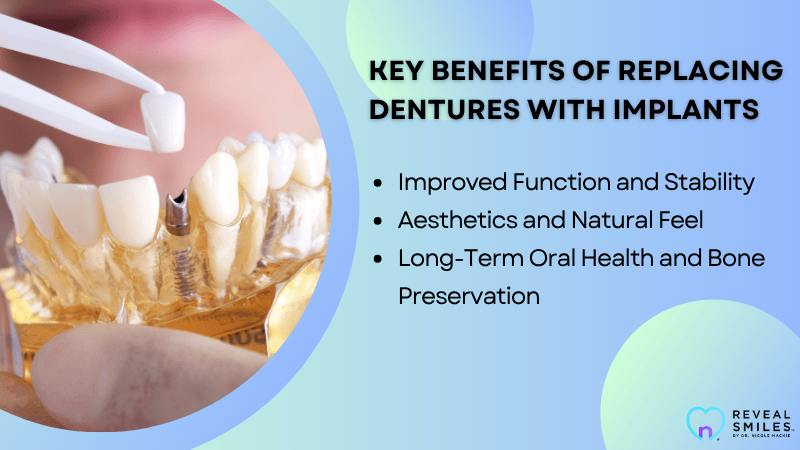
Improved Function and Stability
Dental implants stay firmly in place because they anchor directly into your jawbone. You won’t deal with slipping, clicking, or shifting when you eat or talk.
This means you can eat what you love without worry. Foods that were off-limits with dentures become easy to enjoy again. Biting into an apple or chewing steak becomes natural again.
You don’t need adhesives or pastes to keep your teeth secure. Your implants function like natural teeth, giving you a strong bite and clear speech. Many people say they forget their implants are even there because they feel so natural.
Key stability advantages include:
- No embarrassing movement during meals or conversations
- Stronger chewing power compared to dentures
- Better speech clarity without worrying about dentures slipping
- Freedom from daily adhesive applications
Aesthetics and Natural Feel
Permanent teeth supported by implants look and feel remarkably close to your natural teeth. The crowns are custom-made to match the shape and color that works best for your smile.
Unlike dentures that can look bulky or artificial, implants sit at your gum line just like real teeth. There’s no visible metal or plastic base. Your smile looks natural when you laugh or talk.
The feel is different too. You won’t have a plate covering the roof of your mouth, which means you can taste food better and speak more comfortably. Your tongue moves freely without bumping into denture material.
People around you won’t be able to tell you have dental work. The natural look and feel of implants helps restore your confidence in social settings and professional situations.
Long-Term Oral Health and Bone Preservation
One of the biggest benefits of dental implants is how they protect your jawbone. When you lose teeth, your jawbone starts to shrink over time because it no longer gets stimulation from tooth roots.
Dentures rest on top of your gums but don’t stop this bone loss. In fact, wearing dentures without stimulation from tooth roots can lead to jawbone shrinkage. This changes your face shape and makes your dentures fit poorly over time.
Dental implants act like natural tooth roots. They stimulate your jawbone every time you chew, which keeps the bone healthy and strong. This bone preservation maintains your facial structure and prevents the sunken look that often comes with long-term denture use.
Your oral health improves in other ways too. Implants don’t require grinding down healthy teeth like bridges do. They’re easier to clean than dentures and don’t trap food particles against your gums.
Book your implant evaluation today and discover your permanent smile options.
The Process of Transitioning: From Dentures to Implants
Moving from dentures to permanent implants involves several stages that typically span several months. Each step builds on the previous one to ensure your new teeth have a stable foundation and look natural.
Initial Consultation and Candidacy
Your journey begins with a thorough evaluation to determine if you’re a good candidate for dental implants. During this visit, your dentist or oral surgeon will take X-rays and 3D scans of your jaw.
They’ll examine your jawbone density, gum health, and overall medical condition.
Your dentist will ask about medications you take and any health conditions like diabetes or heart disease. These factors can affect healing and treatment planning. If you smoke, your dentist will discuss how this impacts your success rate with implants.
The evaluation also includes measuring how long you’ve worn dentures. Long-term denture use often leads to bone loss in your jaw. Your dental team will create a personalized treatment plan based on these findings.
They’ll explain whether you need any preparatory procedures before implant surgery can begin.
Preparatory Procedures: Bone Grafting and Sinus Lift
Many denture wearers need a bone graft before getting implants. When you lose teeth or wear dentures for years, your jawbone can lose up to 25 to 50 percent of its volume in just one year.
This happens because dentures sit on top of your gums and don’t stimulate the bone like natural tooth roots do.
A bone graft adds volume and strength to your jaw. During this oral surgery, your surgeon places bone material in areas where your jaw has thinned. This material can come from your own body, a donor, or synthetic sources.
For upper teeth replacements, you might need a sinus lift. This procedure raises the sinus floor to create more room for bone in your upper jaw.
After bone grafting or a sinus lift, you’ll need three to six months of healing time. The longer you’ve been missing teeth or using dentures, the more likely you’ll need these preparatory steps.
Implant Surgery and Osseointegration
Once your jawbone is ready, your oral surgeon will place the implants. These are small titanium or zirconia posts that act like tooth roots. For full dentures, you’ll typically receive four to eight implants that can support an entire arch of teeth.
The dental implant procedure involves making small openings in your gum tissue and drilling into the jawbone. Your surgeon positions each implant precisely where it will provide the best support.
Most patients receive local anesthesia, though sedation options are available.
After placement, osseointegration begins. This is when your jawbone grows around and fuses with the implants. The process takes three to six months for most people.
During this healing period, you’ll need to eat soft foods to protect your implants. Your prosthodontist may provide temporary teeth so you’re not without teeth while healing.
Temporary Teeth and Final Restoration
You won’t be left without teeth during your treatment. Your dental team will provide temporary solutions while your implants heal. These might be modified versions of your existing dentures or a temporary bridge.
Once osseointegration is complete, you’ll return for your final restoration. A dental lab will create custom teeth designed to match your facial features and bite. Your new teeth attach securely to the implants through special connectors called abutments.
The final restoration can be a single crown, bridge, or implant-supported denture. Unlike traditional dentures, these stay in place permanently.
You care for them by brushing twice daily and flossing, just like natural teeth. No more removing them at night or using messy adhesives.
Implant Options for Former Denture Wearers
Former denture wearers have several implant options to choose from, ranging from removable snap-on solutions to permanent fixed teeth.
The best choice depends on your bone density, budget, and whether you prefer a removable or non-removable restoration.
Implant-Supported Dentures
Implant-supported dentures use two to four implants to anchor your denture in place. These work like snap-on dentures that click onto the implants for added stability. You can remove them for cleaning at night.
This option costs less than fixed solutions because fewer implants are needed. Your existing complete denture might be modified to work with the new implants during the healing period.
The denture still rests on your gums, but the implants prevent slipping and clicking. You won’t need messy adhesives anymore. Implant-supported dentures offer more security than traditional full dentures while remaining budget-friendly.
All-on-4 and Full-Arch Solutions
All-on-4® implants use four strategically placed implants to support a full arch of prosthetic teeth. The back implants are angled to avoid areas with less bone. This creates a stable foundation without needing bone grafts in most cases.
You get a fixed set of teeth that don’t come out. Unlike overdentures, these don’t rest on your gums and feel more like natural teeth. You brush and floss them just like regular teeth.
The procedure often allows you to leave with temporary teeth the same day. Full-arch solutions provide the most natural chewing ability and comfort. Some practices use six or more implants for added strength, especially in the upper jaw.
Partial and Overdentures
Partial dentures can be supported by implants if you’re only missing some teeth. This prevents the clasps from damaging your remaining natural teeth. The implants hold the partial denture firmly in place.
Overdentures are removable prosthetic teeth that fit over a small number of implants or remaining tooth roots. They provide better retention than conventional dentures. You snap them on in the morning and remove them at night.
These solutions work well if you want something removable but more stable than what you have now. The implants help preserve your jawbone even though the denture is removable.
Zygomatic Implants for Severe Bone Loss
Zygomatic implants anchor into your cheekbone instead of your jawbone. These specialized implants help patients who have severe bone loss from long-term denture use.
Standard implants won’t work if your upper jawbone has deteriorated too much.
The procedure is more complex and requires an experienced surgeon. But it eliminates the need for extensive bone grafting, which can take months to heal.
Zygomatic implants let you get fixed teeth even when you’ve been told you don’t have enough bone. They’re typically used for the upper jaw and combined with regular implants in the front of your mouth.
Cost Comparison: Dentures Versus Permanent Implants
Traditional dentures typically cost $2,500 to $8,000 for a full set, while implant-supported options range from $12,000 to $60,000 per arch depending on how many implants you need.
Initial Costs and Long-Term Value
The cost of dentures starts much lower than implants. You’ll pay between $2,500 and $8,000 for a complete upper or lower denture set. This includes fabrication and fittings.
Dental implants require a bigger upfront investment. A single tooth implant can cost around $3,000 to $5,000, while full implant-supported dentures run $12,000 to $60,000 per arch.
The higher price covers the surgical placement of titanium posts, abutments, and custom crowns or denture attachments.
Traditional dentures need replacement every 5 to 8 years, adding recurring costs. You’ll also spend $100 to $1,000 on adjustments and refittings as your jawbone changes shape over time.
Implants last 20 years or longer with proper care. While the initial cost of dental implants is higher, you avoid frequent replacements and major adjustments that add up with dentures.
Factors That Affect Pricing
The number of implants per arch directly impacts your total cost. Four to six implants for a full arch cost more than two implants for an overdenture.
Bone grafts add $600 to $5,000 if your jawbone lacks density for implant placement. Extractions and immediate dentures range from $300 to $2,500 depending on how many teeth need removal.
Material choices change your tooth replacement price. Basic acrylic dentures cost less than flexible materials or ceramic components. Zirconia crowns for implants cost more than standard porcelain.
Your location matters too. Urban dental practices charge 10 to 20 percent more than rural clinics due to higher overhead costs and regional wage differences.
Important Considerations and Next Steps
Making the switch involves understanding how to maintain your new teeth and finding a qualified professional who can guide you through the process with confidence.
Caring for Your Dental Implants
Your implants need daily attention just like natural teeth. Brush twice a day and floss around each implant crown and abutment to prevent bacteria buildup. Water flossers work well for cleaning hard-to-reach areas between implants.
You won’t need denture adhesive anymore. Your implants stay firmly in place without pastes or strips.
Visit your dentist every six months for professional cleanings. These checkups let your dental team spot potential problems early. They’ll examine the tissue around your implants and check that everything stays secure.
Avoid chewing on hard items like ice or pen caps. While implants are durable, extreme force can damage them over time. Most patients can eat normally without worry once healing is complete.
Choosing the Right Provider
Look for a dentist with specific training in implant dentistry. A prosthodontist specializes in replacing missing teeth and can handle complex cases. Check how many implant procedures they’ve completed and ask to see before-and-after photos.
Find out if the office has an in-house surgical team. Having all specialists in one location makes the process of switching from dentures to implants simpler and faster.
Ask about technology. Digital planning tools and 3D imaging help ensure precise implant placement. Modern practices should offer these options.
Read patient reviews and testimonials. Real experiences give you insight into what to expect from your treatment and recovery.
What to Ask at Your Consultation
Start by asking if you’re a candidate for implants. Your provider should explain whether you need bone grafting or can proceed right away.
Get details about your treatment timeline. Find out how long each phase takes and when you’ll receive your final teeth.
Key questions to cover:
- What type of implant solution fits my needs?
- Can my current dentures be used during healing?
- What does recovery look like after surgery?
- How much will treatment cost and what payment options exist?
Ask about success rates at their practice. Most dental implants have high success rates when placed by experienced providers.
Request a written treatment plan. This should list all procedures, costs, and expected timeframes so you know exactly what lies ahead.
Frequently Asked Questions
People considering the switch from traditional dentures often have similar questions about costs, procedures, and long-term care. Understanding these key factors helps you make an informed decision about your dental health.
What are the cost differences between standard dentures and implant-supported options?
Standard dentures typically cost between $1,000 and $3,000 per arch. They’re the most affordable option upfront but require replacement every 5 to 7 years.
Implant-supported dentures cost significantly more initially. You can expect to pay anywhere from $15,000 to $30,000 or more per arch depending on the number of implants needed.
The price difference reflects the surgical placement of titanium posts into your jawbone. Your insurance coverage affects the final cost since different plans cover implants at varying levels.
Can dentures be converted to non-removable, implant-supported ones?
Yes, you can transition from dentures to implants even if you’ve worn dentures for many years. Your dentist will evaluate your jawbone density and overall oral health to determine eligibility.
The conversion process involves placing implants into your jaw and attaching permanent teeth to them. Some people choose a hybrid approach where implants stabilize their existing removable dentures.
You’ll need enough healthy jawbone to support the implants. If bone loss has occurred, your dentist may recommend bone grafting before implant placement.
What are the long-term benefits of choosing permanent implants over traditional dentures?
Permanent implants prevent the bone loss that naturally occurs with traditional dentures. The implant posts stimulate your jawbone like natural tooth roots and preserve your facial structure.
You can eat whatever foods you want without worrying about slipping or discomfort. Implants restore your natural chewing capacity because they’re firmly anchored in your jaw.
Your quality of life improves in practical ways. You won’t need messy adhesives, and you can taste food properly since implants don’t cover the roof of your mouth.
Permanent implants can last a lifetime with proper care and maintenance. Traditional dentures require replacement every several years as your jaw shape changes.
How do fixed implant-supported dentures compare to removable options in terms of maintenance?
Fixed implant-supported dentures stay in your mouth permanently. You clean them by brushing and flossing just like natural teeth.
Removable implant-supported dentures attach to implants with special connectors. You take them out for cleaning, which makes them easier to maintain thoroughly.
Fixed options feel more like natural teeth since you never remove them. Removable versions offer easy care while still providing better stability than traditional dentures.
Both types require regular dental checkups. Your dentist will monitor the health of your implants and surrounding gum tissue.
What factors influence the cost of getting fixed implant dentures?
The number of implants you need directly affects the total cost. Some procedures use as few as four implants per arch, while others require more for additional support.
Your current oral health plays a major role in pricing. Tooth extractions and bone grafting add to the overall expense if needed before implant placement.
Geographic location impacts costs significantly. Dental procedures in urban areas typically cost more than in rural locations.
The materials used for your replacement teeth affect the final price. High-quality porcelain teeth cost more than acrylic alternatives but offer better durability and appearance.
What procedures are involved in transitioning from traditional dentures to implant-supported ones?
Your dentist starts with a complete evaluation of your mouth and jawbone. X-rays or CT scans show whether you have sufficient bone density for implants.
The surgical phase involves placing titanium posts into your jawbone. This procedure requires local anesthesia or sedation and takes several hours depending on how many implants you’re getting.
A healing period of 3 to 6 months follows implant placement. During this time, the implants fuse with your jawbone through a process called osseointegration.
After healing completes, your dentist attaches small connectors called abutments to the implants. The final step involves securing your new teeth to these abutments for a permanent solution.