
Dental implants can transform your smile and restore your confidence, but the price tag often catches people off guard. A single implant typically ranges from $1,500 to $6,000, while full-mouth restoration can cost between $24,000 and $50,000.
These numbers seem high, but understanding what drives these costs helps you make smarter decisions about your dental care.
The total cost of your dental implant depends on multiple factors including the complexity of your case, your location, the type of implant used, any preparatory procedures you need like bone grafts, and your dentist’s experience level.
Many patients don’t realize that the published starting prices rarely reflect the full sequence of diagnostics, components, and follow-up care most people actually need.
This guide breaks down each cost factor so you can budget accurately and explore options that fit your needs.
You’ll learn what you’re actually paying for, which procedures might add to your bill, and how to find quality care without overspending.
Key Takeaways
- Dental implant costs vary based on your location, case complexity, implant type, and whether you need extra procedures like bone grafts
- The total price includes multiple components like consultations, the titanium post, abutment, crown, and any preparatory work
- Payment plans, dental schools, insurance coverage, and shopping around can help make implants more affordable
Key Factors That Impact Dental Implant Costs
The price you’ll pay for dental implants depends mainly on how many teeth you’re replacing, how complex your case is, and where you receive treatment.
These factors can make the difference between a few thousand dollars and tens of thousands.
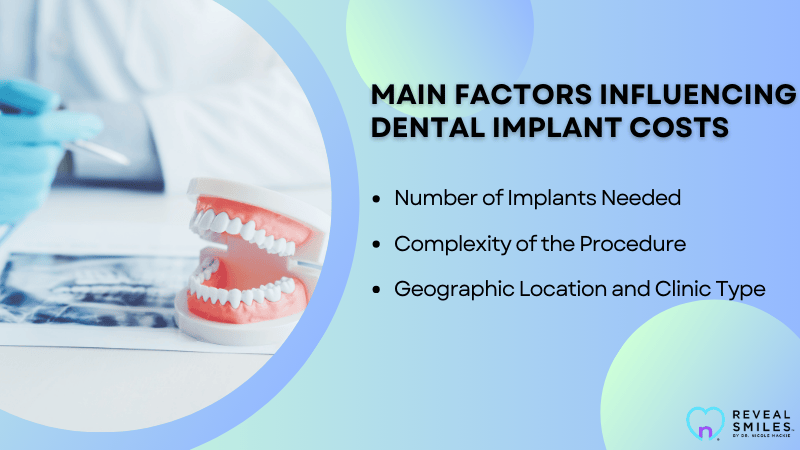
Number of Implants Needed
A single dental implant typically costs between $3,000 and $6,700 per tooth. This price includes the implant post, abutment, and crown.
When you need multiple implants, the total cost rises but the per-tooth price often decreases.
Replacing three or four teeth with individual implants can cost $9,000 to $20,000. Full-mouth implants present a different pricing structure entirely.
For full-mouth restoration, you have options. Traditional approaches using 6-8 implants per arch can cost $30,000 to $50,000 per arch. All-on-4 systems, which use just four implants per arch to support a full set of teeth, typically range from $15,000 to $30,000 per arch.
Multiple dental implants require more surgical time and materials. However, many dentists offer package pricing that reduces your per-implant cost when you’re getting several placed at once.
Complexity of the Procedure
Your bone health directly affects how much you’ll pay. If you have sufficient bone density, your dentist can place the implant right away. But if bone loss has occurred, you’ll need bone grafting first.
Bone grafting adds $300 to $2,500 to your total cost. The complexity of the procedure increases when your case requires sinus lifts, which cost $1,500 to $3,000.
Tooth extractions add another $150 to $400 per tooth. Some patients need ridge augmentation or soft tissue grafts to prepare the site properly.
Each additional procedure extends your treatment timeline and increases costs.
Advanced imaging like CBCT scans costs $200 to $600 but helps your dentist avoid complications. Sedation options range from $200 for oral sedation to $1,500 for IV sedation.
Geographic Location and Clinic Type
Dental implant costs vary significantly across different regions. The nationwide median cost for a complete dental implant in 2025 was $4,000, but this number changes based on where you live.
Urban areas with higher overhead costs typically charge more than rural practices. A dental implant in New York City or San Francisco might cost 30-40% more than the same procedure in a smaller town.
The type of provider matters too. Specialists performing implant procedures had a median cost of $3,400, which is lower than the $4,800 median for general dentists.
This challenges the common assumption that specialists always cost more.
Practices with advanced technology and experienced teams may charge premium prices. However, these clinics often have lower complication rates and better long-term outcomes.
Breakdown of Dental Implant Treatment Components
Dental implants are made up of three distinct parts that work together to replace your missing tooth.
The implant post anchors into your jawbone, the abutment connects the post to the visible tooth, and the crown provides the natural-looking replacement you see when you smile.
Implant Post and Materials
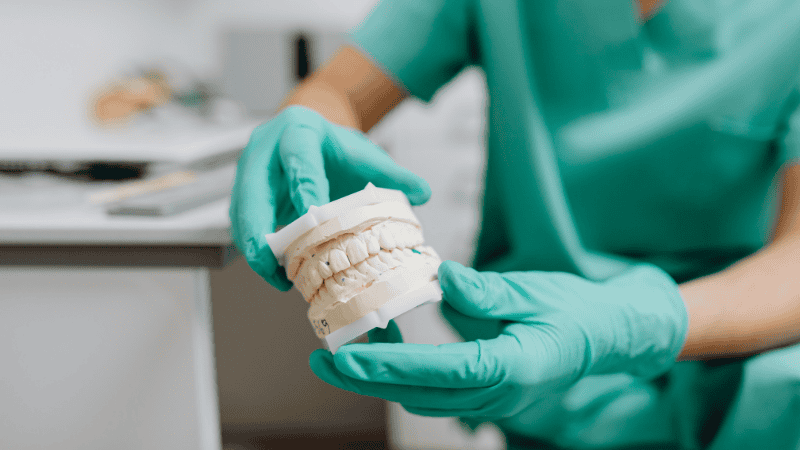
The implant post serves as the artificial tooth root that goes into your jawbone during the dental implant procedure.
Most posts are made from titanium because this metal has excellent biocompatibility and naturally fuses with bone through a process called osseointegration.
Your post typically costs between $1,000 and $3,000 depending on the brand and material. Premium brands often charge more but may offer better long-term track records.
Some patients choose zirconia posts instead of titanium for a metal-free option, though these usually cost more.
The material quality directly affects how well your implant integrates with bone and how long it lasts.
Titanium has decades of research supporting its use in implant dentistry, while zirconia is newer but appeals to patients who want ceramic materials throughout their restoration.
Role of the Abutment
The abutment is the connector piece that attaches to your implant post and holds the crown in place.
You can choose between stock abutments that come pre-made or custom abutments designed specifically for your mouth.
Stock abutments cost less but may not fit as precisely around your gum line. Custom abutments add $300 to $500 to your total cost but create better gum contours and a more natural appearance.
Your dentist shapes the abutment to support healthy tissue and proper crown placement.
The abutment material matters too. Titanium is common and affordable, while zirconia abutments work better for front teeth where metal might show through thin gums.
Custom Crown and Prosthetic Options
Your crown is the visible part that looks and functions like a natural tooth. Crown materials range from porcelain-fused-to-metal to full ceramic and zirconia, with each option affecting both appearance and cost.
Basic porcelain-fused-to-metal crowns cost less but may show a dark line at the gum. All-ceramic and layered zirconia crowns cost more but provide better translucency and color matching.
Lab fees increase when technicians hand-shade your crown to match neighboring teeth perfectly.
For a single tooth implant, expect to pay $1,000 to $3,000 just for the crown.
If you need multiple teeth replaced, an implant-supported bridge spreads the cost across fewer implant posts while still giving you multiple replacement teeth.
The complexity of your prosthetic and the lab work required drive the final price you pay.
Preparatory and Additional Procedures That Influence Price
Not every patient is ready for immediate implant placement. Some need bone grafting to strengthen weak jawbone areas, while others require sinus lifts to create adequate space in the upper jaw.
Bone Grafting Requirements
Your jawbone health plays a major role in whether you need bone grafting before receiving implants. When teeth are missing for extended periods, the jawbone begins to shrink and lose density.
This process makes it difficult to support an implant without first rebuilding the bone structure.
Bone grafts add time, expertise, and biomaterials to your treatment plan, which directly increases the total cost. The graft material can come from your own body, a donor, or synthetic sources.
Each option has different pricing.
Your dentist will use CBCT scans or 3D imaging to measure your bone density and determine if grafting is necessary.
The healing period for bone grafts typically takes three to six months before implant placement can proceed. This extended timeline is essential for proper bone integration and long-term implant success.
Sinus Lift Procedures
A sinus lift becomes necessary when you need upper back tooth implants but lack sufficient bone height.
Your sinuses sit just above your upper jaw, and without enough bone between them and your mouth, implants cannot be safely placed.
During this procedure, your oral surgeon gently lifts the sinus membrane and adds bone material underneath. This creates the vertical space needed for stable implant placement.
Sinus augmentation procedures add to the general cost because they require specialized surgical skills and additional materials.
Recovery from a sinus lift usually takes several months before your new bone is strong enough to support implants. The procedure success rate is high when performed by experienced specialists.
Tooth Extraction and Other Preparatory Steps
Preparatory treatments like extractions or periodontal disease treatment can affect your total dental implants cost. If you still have damaged or infected teeth in the implant area, they must be removed first.
The overall state of your dental health and need for these interventions can vary widely, which influences your total investment.
Gum disease treatment is particularly important because active infection can cause implant failure. Your dentist may need to perform deep cleanings or other periodontal procedures before surgery.
Some patients also need temporary prosthetics during the healing phase. These additional steps ensure your implants have the best foundation for lasting success.
Expertise, Technology, and Success Rates
The dentist you choose and the tools they use directly impact both your immediate costs and your long-term results.
More experienced providers with advanced technology may charge higher fees, but they often deliver better outcomes that save you money over time.
Provider Experience and Specialization
Your choice between a general dentist, periodontist, or oral surgeon affects both the cost and quality of your implant placement.
Specialists who focus exclusively on surgical placement typically have more training and experience with complex cases.
Dentists certified by organizations like the American Academy of Implant Dentistry have completed additional coursework beyond dental school.
They often charge more because they can handle difficult situations like low bone density or multiple missing teeth.
A comprehensive consultation with an experienced provider helps identify potential problems before surgery begins.
Specialist training typically includes:
- Advanced surgical techniques
- Bone grafting procedures
- Complex implant placement methods
- Management of complications
General dentists may offer lower prices for straightforward cases. However, specialists usually have higher success rates with challenging dental implant procedures.
Advanced Imaging and Computer-Guided Surgery
Modern technology increases upfront costs but improves accuracy during implant placement.
Computer-guided surgery uses 3D scans to plan the exact position and angle of each implant before your procedure starts.
This technology allows your dentist to avoid nerves and blood vessels while placing implants in the strongest bone. The precision reduces surgery time and helps implants last longer.
Practices that invest in cone beam CT scanners and surgical guides charge more, but you benefit from fewer complications and faster healing.
Digital planning also makes it easier to create custom abutments and crowns that fit perfectly with your implants.
Long-Term Success and Follow-Up Care
Dental implants have a 97% success rate when placed by experienced providers. Your total investment includes not just the surgery but also the follow-up care that protects your implants for decades.
Quality practices include regular check-ups in their treatment plans to monitor healing and catch problems early. Your dentist should examine your implants at least once per year to ensure the bone stays healthy around them.
Implant success depends on proper maintenance and professional cleanings. Practices that provide thorough follow-up care may charge more initially, but they help you avoid costly repairs or replacements later.
Good providers also offer warranties that cover complications within the first few years after your procedure.
Types of Implants and Alternatives
Different implant types serve different needs and budgets. The number of missing teeth, your jawbone health, and how much you want to spend will determine which option works best for you.
Single, Multiple, and Full Mouth Solutions
A single implant replaces one missing tooth with a titanium post, abutment, and crown. This costs between $3,000 and $6,000 per tooth in most cases.
If you’re missing several teeth, you have choices. You can get individual implants for each tooth, or you can use implants to support a bridge that replaces multiple teeth at once.
Using fewer implants to support multiple crowns saves money compared to replacing each tooth separately.
Full mouth dental implants typically cost $15,000 to $30,000 per jaw. This option replaces all your upper or lower teeth using four to eight implants per arch.
Full-mouth implants give you permanent teeth that look and work like natural ones.
All-on-4 and Other Fixed Options
All-on-4 implants use just four strategically placed posts to support a full arch of replacement teeth. This approach costs less than placing individual implants for every tooth.
The procedure takes advantage of your existing bone, even if you have some bone loss.
Two implants go in the front of your jaw at a straight angle, while two go in the back at an angle to avoid areas with less bone.
Other fixed options include All-on-6, which uses six implants for extra stability.
Some patients need these additional implant treatment approaches if they have significant bone loss or want more support.
The extra implants add to the total cost but provide better long-term results for some people.
Mini Implants and Implant-Supported Dentures
Mini implants are smaller than standard implants and cost less. They work well for people who can’t get traditional implants due to bone loss or health issues.
These narrow posts measure less than 3mm in diameter compared to 3.5-6mm for regular implants.
An implant-supported denture snaps onto implants instead of relying on suction or adhesive. You can remove it for cleaning, but it stays secure while eating and talking.
This tooth replacement option costs $5,000 to $15,000 per arch.
Implant-supported dentures need two to four implants per jaw. They feel more stable than regular dentures and let you eat a wider variety of foods without worry.
Comparing Implants to Dental Bridges
A dental bridge fills the gap from missing teeth by attaching crowns to the teeth on either side. Bridges cost $2,000 to $5,000 and last 10 to 15 years with proper care.
Unlike implants, bridges require grinding down healthy teeth next to the gap. This permanently changes those teeth and can weaken them over time.
Key Differences:
| Feature | Dental Implants | Dental Bridges |
| Lifespan | 20+ years | 10-15 years |
| Bone preservation | Yes | No |
| Adjacent teeth affected | No | Yes |
| Initial cost | Higher | Lower |
Implants preserve your jawbone because they replace the tooth root. Bridges don’t stop bone loss in the gap, which can change your face shape over years.
Comparing different implant types helps you understand which option gives you the best value for your specific situation.
Ways to Manage Costs and Make Dental Implants Affordable
The price of dental implants doesn’t have to prevent you from getting the treatment you need.
Payment plans, insurance coverage, and alternative providers can help reduce your out-of-pocket expenses significantly.
Dental Insurance and Financing Options
Most dental insurance plans don’t cover the full cost of implants, but many will pay for parts of the procedure.
Your plan might cover the crown, extraction, or diagnostic imaging even if it excludes the implant itself.
Check with your insurance provider to see exactly what’s included. Some plans classify implants as cosmetic, while others treat them as medically necessary.
If insurance doesn’t help much, flexible payment plans can spread costs over months or years. Many dental offices offer in-house financing with low or zero interest.
Third-party lenders like CareCredit provide similar options.
Payment plans let you start treatment without paying the full amount upfront. This makes a $3,000 to $4,500 procedure more manageable for your monthly budget.
Dental Tourism and Affordable Providers
Dental tourism has become popular for patients seeking lower implant pricing. Countries like Turkey, Mexico, and Costa Rica offer high-quality care at much lower prices than the United States.
You might pay $400 to $900 for a single implant abroad compared to $1,500 to $6,000 in the U.S. Full mouth dental implants can cost $4,000 to $9,000 internationally versus $24,000 to $50,000 domestically.
Before traveling, research the clinic’s credentials and read patient reviews. Look for facilities with international accreditation and experienced dentists.
Another option is visiting dental schools that offer discounted treatments. Students perform procedures under expert supervision, reducing costs while maintaining quality standards.
Maximizing Value and Avoiding Hidden Costs
Get detailed quotes from multiple providers before deciding. A complete estimate should include the implant, abutment, crown, and any necessary procedures like bone grafts.
Ask about all potential extra charges upfront. Some offices quote low prices but add fees for consultations, imaging, or follow-up visits later.
Key items to verify in your quote:
- Diagnostic imaging and X-rays
- Surgical fees
- Anesthesia costs
- Temporary restoration
- Follow-up appointments
Consider whether are dental implants worth the cost for your situation.
While implants have higher upfront costs, they typically last 20+ years compared to dentures that need replacement every 5 to 8 years. The long-term value often justifies the initial investment.
Frequently Asked Questions
Patients often have similar concerns when considering dental implants.
Material choices, location factors, case complexity, surgeon expertise, extra procedures, and payment options all play important roles in determining what you’ll pay.
How can the choice of material influence the price of dental implants?
The material used for your implant affects both the cost and performance. Titanium is the most common choice and tends to be less expensive than other options.
Zirconia implants cost more because they’re metal-free and white in color. These work well if you have metal allergies or want a more natural look.
Premium implant brands like Nobel Biocare, Straumann, and Zimmer charge higher prices than generic options. These companies invest heavily in research and quality control.
The crown material also matters. Porcelain crowns look natural but cost more than other materials.
What part does dental implant localization play in overall treatment cost?
Where you get your implant makes a big difference in price. Urban dental clinics usually charge more than rural ones because they have higher rent and overhead costs.
Different countries have vastly different pricing structures. In the USA, a single implant typically costs between $3,000 and $6,000.
Mexico offers the same procedure for $1,000 to $2,500, while India ranges from $800 to $2,000.
Your local area’s cost of living affects dental prices. Cities with expensive housing and high wages will have pricier dental care.
Some patients save 50-70% by traveling to other countries for dental work. You need to research the clinic carefully and factor in travel costs when considering this option.
Does the complexity of the individual case affect implant pricing?
Your specific dental situation has a major impact on the final cost. Simple cases where you have good bone density and healthy gums cost less than complicated ones.
Patients with bone loss may need extra procedures before getting implants. Missing teeth for a long time can cause your jawbone to shrink.
The position of the missing tooth matters too. Front teeth require more precise work for aesthetic reasons. Back teeth need to handle more chewing force.
If you need multiple implants, the complexity increases. Full-mouth restorations require more planning and surgical time than single tooth replacements.
In what ways does the experience of the dental surgeon impact the cost?
More experienced dentists and oral surgeons charge higher fees for their services. They’ve completed thousands of procedures and know how to handle complications.
Board-certified specialists typically cost more than general dentists. They have advanced training in implant placement and complex cases.
A skilled surgeon reduces your risk of complications and implant failure. This expertise can save you money in the long run by avoiding repeat procedures.
Dentists with advanced technology and training in computer-guided surgery often charge premium prices. These tools help them place implants more accurately.
Can additional procedures, like bone grafting, change the final price of getting dental implants?
Extra procedures can add thousands of dollars to your total cost. Bone grafting ranges from $500 to $3,000 depending on how much bone you need.
A sinus lift costs between $1,500 and $5,000 when your upper jaw doesn’t have enough bone height. This procedure raises the sinus floor to make room for the implant.
You might need tooth extractions before getting implants. Each extraction costs $100 to $600 per tooth.
Some patients require gum disease treatment before implant surgery. Healthy gums are essential for implant success.
How do insurance and payment plans contribute to managing the cost of dental implants?
Some dental insurance plans cover up to 50% of implant costs. Many insurers consider implants a cosmetic procedure and don’t offer coverage.
Payment plans help you spread the cost over several months or years. Many dental offices offer financing through third-party companies with low or no interest.
Dental discount plans provide reduced rates at participating dentists. These aren’t insurance but can save you 10-30% on procedures.
Health savings accounts (HSAs) and flexible spending accounts (FSAs) let you use pre-tax dollars for dental implants. This reduces your effective cost by your tax rate.
Some clinics offer promotions or discounts when you get multiple implants at once. Ask about package deals if you need several teeth replaced.