
You wake up with a tight jaw, a dull headache behind your temples, or teeth that feel weirdly sensitive to cold coffee.
Someone mentions grinding, and suddenly you’re standing in a pharmacy aisle staring at an over-the-counter mouthguard, wondering if that’s the whole solution.
It might help. It might also slide around all night, feel too thick to sleep with, or wear through in a few weeks.
When comparing a custom night guard vs over the counter option, fit is one of the biggest differences to consider.
The difference between a custom night guard and an over-the-counter option comes down to fit, and fit affects far more than comfort: it controls how the guard stays in place, how grinding force spreads across your teeth, and whether you’ll keep wearing it past week two.
Teeth grinding, called bruxism, often tracks with stress, and it usually happens while you’re asleep and unaware of it.
That’s why the appliance you choose matters for your oral health over years, not just for one uncomfortable night.
Key Takeaways
- Store-bought guards generally cost less upfront, while dentist-made guards cost more because they are custom-fitted and professionally adjusted.
- A loose or bulky guard can shift your bite contacts, trigger jaw soreness, and end up in a drawer instead of your mouth.
- Persistent pain, visible tooth wear, damaged crowns, or possible sleep apnea signs deserve an exam before you buy anything.
Table of Content
- Custom and OTC Options at a Glance
- Why Precise Fit Protects More Than Comfort
- Which Guard Materials and Designs Match Your Grinding?
- When Does a Dentist-Made Guard Earn Its Cost?
- Choosing Protection That Fits Your Mouth
- Frequently Asked Questions
Custom and OTC Options at a Glance
The cost of a night guard varies depending on the type, material, level of customization, and where you receive it.
Dentist-made custom guards generally cost more than online or over-the-counter options because they include a personalized fit and professional bite adjustment.
| Custom (dentist) | Online impression kit | Boil-and-bite | Stock OTC | |
| Cost | Higher | Moderate | Lower | Lower |
| Durability | Typically longer-lasting | Varies | Usually shorter-term | Usually shorter-term |
What Is a Custom-Fitted Night Guard?
A custom-fitted night guard starts with dental impressions or a digital scan of your teeth, which a lab uses to build an appliance that matches your exact tooth shapes.
Your dentist then seats it in your mouth, checks how your teeth touch on it, and polishes down any high spots. That adjustment step is the part no mail-order product can replicate.
The material is denser and thinner than drugstore versions, so you get real protection without a mouthful of bulk.
With proper care, a custom night guard is generally designed for longer-term use, although durability varies based on the material and grinding intensity.
What Types of Over-the-Counter Night Guards Are Available?
Store-bought night guards come in a few forms, and they’re not equal. Stock guards arrive pre-shaped and ready to wear.
Boil-and-bite night guards soften in hot water so you can press them onto your teeth for a semi-custom shape.
There’s also a middle category: online impression-kit guards. You order a kit, take your own mold at home, mail it to a dental lab, and receive a lab-fabricated guard.
OTC guards make sense when you clench once in a while, when you’re waiting on a custom guard, or when you want to test whether you can even sleep with something in your mouth.
Why a Sports Mouthguard Is Not a Night Guard
A sports mouthguard is built to absorb a single hard impact, so it’s thick, soft, and cushiony. Grinding is the opposite problem: hours of steady, repeated pressure.
Soft sports mouthguards are designed for impact protection rather than hours of nighttime grinding.
They may also feel bulky or uncomfortable when worn overnight, especially because they are not designed specifically for nighttime use.
If you play contact sports and grind at night, you need two separate appliances. Our teeth grinding services at Reveal Smiles cover the nighttime side of that equation.
Why Precise Fit Protects More Than Comfort
Fit determines whether a guard stays seated all night and whether your bite lands evenly on it.
A guard that rocks, tips, or only touches on a few teeth concentrates force in the wrong places, and that’s when people report new soreness instead of relief.
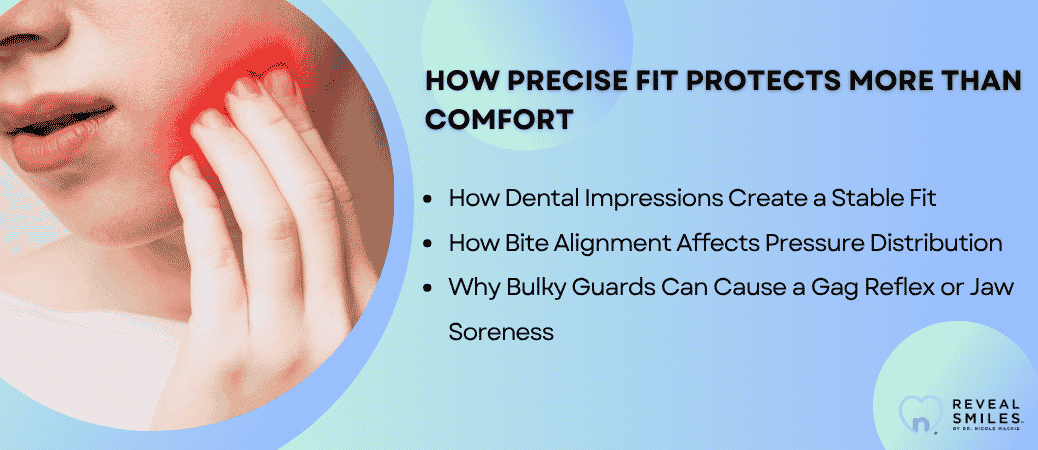
How Dental Impressions Create a Stable Fit
Accurate dental impressions capture the grooves, contact points, and curves of every tooth, which is what creates suction-like retention.
That snug hold does two things. It keeps the guard from popping loose when you shift positions, and it lets the appliance be made thinner because it doesn’t need extra bulk to stay on.
Home impression kits can work well when you follow the instructions carefully. A rushed or bubbled mold produces a guard that fits your mold, not your mouth.
How Bite Alignment Affects Pressure Distribution
An occlusal appliance works by giving your upper and lower teeth a single smooth surface to meet on, spreading pressure across many teeth at once.
When bite alignment is off, the guard creates high spots. Your grinding force lands on two or three teeth instead of a full arch, which raises the chance of chips or loosened dental work.
Bite misalignment is also one reason a dentist checks and adjusts a new guard before you take it home.
Why Bulky Guards Can Cause a Gag Reflex or Jaw Soreness
Over-the-counter night guards are often thicker than custom ones, and many people find them too thick to sleep with comfortably.
Extra bulk pushes your jaw open wider than usual, which can leave your jaw muscles stretched and sore by morning. Material that extends too far back may also trigger a gag reflex the moment you lie down.
The practical result is simple: a guard you dislike wearing gives you no protection at all. Consistent nightly wear beats any spec sheet.
Which Guard Materials and Designs Match Your Grinding?
Material choice should follow your grinding intensity. Soft EVA works for light clenchers, hard acrylic holds up under heavy force, and picking the wrong one is a common reason a guard fails early.
When a Soft Night Guard May Be Appropriate
Soft night guards are made from flexible EVA, feel cushiony on day one, and are the friendliest option if you’ve never worn an appliance before.
They suit mild grinding, occasional stress-related clenching, and short-term use. Some people also find them easier to tolerate while adjusting to the sensation of sleeping with something on their teeth.
The tradeoff is durability. Soft material dents and wears fast, so heavy grinders often go through them quickly.
Why Hard Acrylic Often Suits Heavy Grinding
Hard acrylic resists wear, holds its shape, and gives your teeth a stable surface to slide across instead of a spongy one to sink into.
Because the material is strong, hard guards can be made thinner, which usually means less bulk and better sleep. They also protect natural enamel and existing dental work more predictably under high force.
A hard guard needs to fit precisely. There’s no flex to forgive a sloppy mold, which is why these are typically dentist-supervised or lab-made.
How Mild and Severe Bruxism Change the Recommendation
Mild grinding with no visible tooth wear can often start with an affordable guard while you watch how symptoms respond.
Severe bruxism changes the math. Flattened cusps, chipped edges, hairline cracks, or tooth sensitivity from thinning enamel are signs that dental damage is already happening, and a thin store guard won’t spread that force safely.
When Does a Dentist-Made Guard Earn Its Cost?
A dentist-made guard earns its price when you have existing dental work to protect, ongoing symptoms, or grinding strong enough to destroy cheaper appliances.
The exam that comes with it is often worth as much as the guard.
How Much Does a Custom Night Guard Cost?
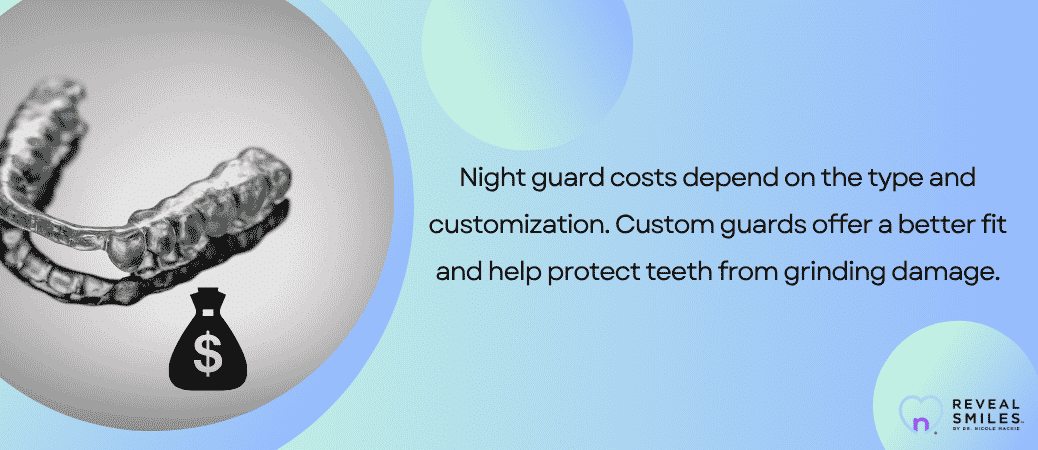
The cost of a night guard varies based on the type, material, level of customization, and where you receive it.
Dentist-made custom guards generally cost more than online or over-the-counter options because they include a personalized fit and professional bite adjustment.
Cost is only one factor to consider. A properly fitted guard may help protect your teeth and existing dental work from damage caused by ongoing grinding.
If price is the sticking point, ask about financing options before ruling out a custom guard.
Can Dental Insurance Help Pay for a Night Guard?
Dental insurance coverage for a custom night guard varies by plan. Some plans may provide coverage when a dentist recommends the appliance for diagnosed teeth grinding or related dental concerns.
Before treatment, check your specific benefits, coverage limits, and eligibility requirements. You can also review Reveal Smiles’ insurance details or ask the team about your available options.
Who Should See a Dentist Before Buying a Guard?
Some situations are worth an exam first. Book one if you have:
- Jaw pain, clicking, or limited opening that could point to a TMJ disorder
- Morning headaches or facial soreness most days
- Crowns, veneers, bridges, or implants you want to protect
- Visible tooth wear, chips, or new tooth sensitivity
- Loud snoring, gasping, or daytime fatigue that could suggest sleep apnea
A standard night guard is designed to protect the teeth from grinding rather than address an underlying sleep disorder.
If you regularly snore, gasp during sleep, or experience daytime fatigue, discuss these symptoms with an appropriate healthcare professional before assuming grinding is the only concern.
If you’re weighing treatment options, our comparison of Botox vs. night guard for TMJ covers what each approach addresses.
Reveal Smiles can also evaluate whether your symptoms point somewhere beyond grinding.
Choosing Protection That Fits Your Mouth

An over-the-counter night guard is a reasonable place to start if you clench occasionally, need something tonight, or want to learn whether you can sleep with an appliance at all.
Nobody should feel bad about starting there.
A custom night guard becomes the better value once teeth grinding is regular, symptoms stick around, or you have dental work worth protecting.
Precise fit keeps the guard seated, spreads force evenly, and stays comfortable enough that you’ll wear it every night, which is what protects your oral health over the long run.
Watch for the signals: soreness that doesn’t fade, teeth that look flatter than they used to, or a guard that keeps falling out.
When you see those, bring the guard you own to your next exam and ask what your bite is doing. Reveal Smiles is glad to take a look.
Frequently Asked Questions
Is a custom night guard really better than an over-the-counter guard?
For regular or heavy grinding, a custom night guard may offer advantages because it is made to fit your teeth and can be professionally adjusted.
Over-the-counter guards may work for occasional or short-term use but can feel bulkier or fit less securely.
Can I use a boil-and-bite night guard for teeth grinding?
A boil-and-bite night guard can work for light, occasional grinding or as a short-term bridge while you wait for a custom guard.
The molded fit is only as good as your at-home technique, and the softer material breaks down quickly under strong clenching.
Should I get a night guard from a dentist if I have crowns or veneers?
That’s worth discussing with a dentist first. Crowns and veneers can chip or debond under grinding force, and a guard with uneven contacts may load your restorations in exactly the wrong spot.
Why does my store-bought night guard make my jaw hurt?
Extra thickness and uneven contacts are the usual culprits. A bulky guard holds your jaw open wider than normal, and when only a few teeth touch the surface, your muscles work harder all night, which shows up as morning jaw pain.
How long does a custom night guard usually last?
The lifespan of a custom night guard depends on the material, how heavily you grind, how often you wear it, and how well you care for it.
Heavy grinders may need replacement sooner, so bring your guard to regular checkups so your dentist can monitor its condition.