
If you smoke and need to replace missing teeth, you might wonder whether dental implants are even an option for you.
The good news is that smokers can successfully get dental implants, though tobacco use does increase the risk of complications and lowers success rates compared to non-smokers.
Understanding how smoking affects the implant process can help you make informed decisions and take steps to improve your chances of a positive outcome.
Smoking affects healing and bone integration after implant surgery. Nicotine reduces blood flow to your gums and jawbone, which slows down the healing process and makes infections more likely.
Despite these challenges, many smokers do receive implants successfully when they follow specific preparation and aftercare guidelines.
Your commitment to quitting smoking (even temporarily) can make a real difference in how well your implants heal and last.
This guide will walk you through the risks, success rates, and practical steps you can take to maximize your chances of keeping your new teeth healthy and functional for years to come.
Key Takeaways
- Smokers can get dental implants but face higher implant failure rates and complications than non-smokers
- Quitting smoking before and after surgery significantly improves healing and long-term implant success
- Proper oral hygiene, professional follow-ups, and working closely with your dentist help reduce risks for smokers
Talk with a dental expert about safe, long-lasting implant options.
Table of Content
- Can Smokers Successfully Get Dental Implants?
- How Smoking Impacts Dental Implant Healing
- Implant Success Rates and Common Risks for Smokers
- Essential Steps for Smokers Seeking Dental Implants
- Minimizing Risks and Exploring Alternatives
- Frequently Asked Questions
Can Smokers Successfully Get Dental Implants?
Yes, smokers can get dental implants, but tobacco use does affect your chances of success and requires honest discussion with your dentist about risks and realistic outcomes.
Who Qualifies as a Candidate
Most smokers can qualify for dental implants as long as they have adequate jawbone, healthy gums, and no uncontrolled medical conditions.
Your dentist will evaluate your oral health, smoking habits, and overall medical history during a consultation.
You’ll need sufficient bone density to support the implant. If you’ve lost bone from missing teeth or gum disease, you might need a bone graft before placement.
Your gum tissue should be free from active infection or severe periodontal disease.
The number of cigarettes you smoke daily matters. Light smokers who consume fewer than 10 cigarettes per day typically have better outcomes than heavy smokers.
Your willingness to quit or reduce smoking around surgery time also factors into whether you’re a good candidate.
Your dentist will review other health conditions like diabetes or immune disorders that could combine with smoking to increase complications.
Being honest about your smoking history helps your dental team create the right treatment plan for you.
How Smoking Affects Candidacy
Smoking reduces blood flow to your gums and jaw, which slows healing after implant surgery. Nicotine causes your blood vessels to narrow, meaning less oxygen and fewer nutrients reach the surgical site.
This can interfere with osseointegration; the process where your jawbone bonds to the implant.
Smoking can double the risk of implant failure compared to non-smokers. The chemicals in tobacco weaken your immune system’s ability to fight infection around the implant.
You’re also more likely to develop peri-implantitis, an inflammatory condition that destroys bone around implants.
Your dentist might ask you to stop smoking at least two weeks before surgery and continue abstaining for several weeks after. Even temporary cessation during the healing period helps improve your chances of success.
Some practices require complete cessation before they’ll proceed with implant placement.
Honest Assessment and Expectations
You should expect lower success rates as a smoker compared to non-smokers. While non-smokers typically see success rates above 95%, heavy smokers may experience success rates around 85-90%.
This doesn’t mean implants will fail, but your risk is measurably higher.
Talk openly with your dentist about your smoking habits. Don’t minimize how much you smoke or whether you plan to quit.
Your dental team needs accurate information to assess your true candidacy and warn you about realistic complications.
Dental implants are a popular solution for missing teeth, and many smokers do achieve successful results with proper care.
You’ll likely need more frequent follow-up appointments to monitor healing and catch problems early. Your commitment to oral hygiene becomes even more critical as a smoker with implants.
If you’re not willing to quit smoking even temporarily, discuss alternative tooth replacement options with your dentist to find the best solution for your situation.
Schedule your consultation in Las Vegas, NV to see if dental implants are right for you as a smoker.
How Smoking Impacts Dental Implant Healing
Smoking disrupts the natural healing process your body needs after implant placement. The chemicals in cigarettes reduce blood flow, interfere with bone attachment, and weaken your ability to fight infections.
Nicotine’s Effect on Blood Flow
When you smoke, nicotine causes your blood vessels to constrict. This means less oxygen and fewer nutrients reach the area around your new implant.
Your gums and bone tissue need adequate blood flow to heal properly after surgery. Carbon monoxide from cigarettes binds to hemoglobin in your blood, which further reduces oxygen delivery to healing tissues.
The result is slower wound healing that can last for hours after each cigarette. Your body struggles to repair tissue and build new cells around the implant site.
This extended healing time increases your risk of complications during the critical first weeks after surgery.
Risks to Implant Integration
Smoking directly interferes with osseointegration, the process where your jawbone fuses with the titanium implant. Your bone cells must grow around the implant surface to create a stable foundation.
Nicotine reduces the activity of osteoblasts, which are the cells responsible for building new bone. This slows down bone integration and weakens the connection between your implant and jaw.
Smokers experience lower implant stability during healing compared to non-smokers. Your bone density around the implant may not develop as strongly.
This compromised integration can lead to implant failure in the weeks or months following placement, even if the surgery itself went well.
Influence on Immune Response and Infection
Smoking weakens your immune system’s ability to protect the implant site from bacteria. Your white blood cells become less effective at fighting off potential infections.
The chemicals in tobacco reduce antibody production and limit inflammatory responses that normally defend against harmful bacteria. This allows bacteria to colonize more easily around your implant.
You face a higher risk of developing peri-implantitis, an infection that destroys the bone supporting your implant.
Your body’s natural defenses struggle to respond quickly when problems arise, making infections more common in smokers than non-smokers after implant surgery.
Visit our office in Las Vegas, NV for expert implant care and guidance tailored for smokers.
Implant Success Rates and Common Risks for Smokers
Smokers face notably lower success rates with dental implants compared to non-smokers, with research showing a 140.2% higher risk of implant failure for those who use tobacco.
The complications you might encounter range from immediate healing problems to long-term issues like bone loss and infection.
Success Rate Comparison: Smokers vs. Non-Smokers
If you don’t smoke, your dental implants have a success rate of about 95-98%. As a smoker, your success rate drops to approximately 85-90%.
The difference becomes even more significant when you look at how smoking affects specific areas of your mouth.
Your upper jaw shows higher failure rates than your lower jaw because the bone is naturally less dense there. Tobacco reduces blood flow to your gums and weakens the bone that holds your implant in place.
The amount you smoke matters too:
- Smoking fewer than 10 cigarettes per day carries lower risk
- Smoking more than 10 cigarettes daily increases failure rates
- Heavy smokers (20+ cigarettes per day) face the highest risk
Your implants need good blood flow to heal and fuse with your jawbone. When you smoke, the chemicals in tobacco restrict blood vessels and slow down this critical healing process.
Types of Implant Complications
You’re more likely to develop several specific problems if you continue smoking after getting implants. Peri-implantitis is one of the most serious issues you could face.
Common complications include:
| Complication | How It Affects You |
| Peri-implantitis | Inflammation attacks tissues supporting your implant, similar to gum disease |
| Marginal bone loss | Bone around your implant gradually deteriorates |
| Post-operative infection | Wounds heal slower and infection risk increases |
| Poor osseointegration | Your implant doesn’t properly fuse with your jawbone |
Bone loss happens more frequently in your upper jaw if you smoke. The inflammatory response in your mouth becomes worse because tobacco weakens your immune system’s ability to fight bacteria around the implant site.
Early and Late Implant Failure
Early implant failure occurs within the first few months after your surgery. This happens when your implant doesn’t integrate properly with your bone during the initial healing phase.
Late failure can occur years after your procedure seems successful. You might experience this when chronic inflammation from smoking gradually destroys the bone and tissue supporting your implant.
Smoking affects nearly every stage of dental implant treatment, from initial healing through long-term stability.
Your risk stays elevated even after your implant has been in place for a while. The chemicals in tobacco continue damaging blood vessels and reducing your body’s ability to maintain healthy bone around the implant.
Essential Steps for Smokers Seeking Dental Implants
Quitting tobacco before surgery, maintaining excellent plaque control, and attending scheduled checkups can dramatically improve your implant success as a smoker.
Smoking Cessation Strategies
You need to stop smoking at least two weeks before your implant surgery and stay quit for two to eight weeks afterward. This timeline improves blood flow and helps your body heal properly.
Nicotine replacement therapy can help you manage cravings during this critical period. Patches, gum, or lozenges give your body nicotine without the harmful smoke that restricts blood vessels.
Talk to your dentist about prescription medications like varenicline or bupropion. These drugs reduce withdrawal symptoms and make quitting easier during your implant consultation and recovery.
Helpful cessation resources:
- Your dentist’s smoking cessation program
- State quitlines (1-800-QUIT-NOW)
- Mobile apps that track progress
- Support groups in your area
The longer you stay tobacco-free, the better your implant will integrate with your jawbone.
Even light smokers who quit temporarily see improved healing outcomes compared to those who continue smoking through recovery.
Commitment to Oral Hygiene
You must brush twice daily and clean between your teeth every day to protect your dental implant. Poor oral hygiene allows bacteria to build up around the implant and cause infections.
Use a soft-bristled toothbrush and non-abrasive toothpaste to clean around your implant gently. Your dentist may recommend special brushes or floss designed for implants.
Antimicrobial mouth rinses can reduce bacteria levels in your mouth during the healing phase. Follow your dentist’s instructions about when to start rinsing after surgery.
Daily hygiene checklist:
- Brush morning and night for two minutes
- Floss or use interdental brushes once daily
- Rinse with prescribed mouthwash if recommended
- Avoid touching the surgical site with fingers
Smokers face higher rates of peri-implantitis and bone loss, so your oral hygiene routine needs to be stricter than a non-smoker’s routine.
Importance of Regular Follow-Ups
Your dentist needs to see you more often than non-smokers to catch problems early. Expect visits at one week, two weeks, three months, and six months after surgery.
These appointments let your dental team check how well your bone is bonding to the implant. They’ll measure pocket depths, look for inflammation, and take X-rays to monitor bone levels.
Professional cleanings remove hardened plaque that you can’t eliminate at home. Your hygienist will use special tools that won’t damage your implant surface.
Missing appointments puts your investment at risk because small issues can turn into big problems fast.
Early signs of infection or bone loss are often painless, so you won’t notice them without professional monitoring.
Your dentist may schedule you for cleanings every three to four months instead of the standard six months. This closer surveillance helps smokers maintain their implants long-term.
Minimizing Risks and Exploring Alternatives
Dentists can recommend specific procedures to strengthen your jaw and gums before implant placement, while several tooth replacement methods exist if implants aren’t the right choice for your situation right now.
Additional Procedures and Supportive Therapies
Your dentist may suggest bone grafting if you have insufficient jaw density for stable implant placement.
This procedure adds bone material to areas where natural bone has deteriorated, creating a stronger foundation for the implant to fuse properly.
Strict oral hygiene routines help control bacteria that can interfere with healing. You’ll need to brush twice daily, use interdental cleaners, and rinse with antimicrobial mouthwash as directed.
Some dentists prescribe antibiotics before and after surgery to reduce infection risk. They may also recommend more frequent follow-up visits during the first few months to monitor healing progress closely.
Nicotine replacement products like patches or gum can help you manage cravings without exposing your surgical site to smoke toxins.
These alternatives still contain nicotine but eliminate the harmful chemicals from combustion that damage healing tissues.
Bone and Gum Health Assessments
Your dentist will take 3D scans or X-rays to measure bone volume and density in your jaw. These images show whether you have enough healthy bone to support an implant or if you’ll need grafting first.
A periodontal exam checks for active gum disease, which must be treated before implant surgery.
Infected or inflamed gums create an unstable environment that prevents proper bone integration with the implant surface.
Your dentist will evaluate your smoking frequency and overall health history. Heavy smokers with additional risk factors like diabetes may need to address multiple issues before qualifying for treatment.
Blood tests can reveal factors that affect healing ability. Your dentist might order these if you have medical conditions that could complicate surgery or recovery.
Alternative Tooth Replacement Options
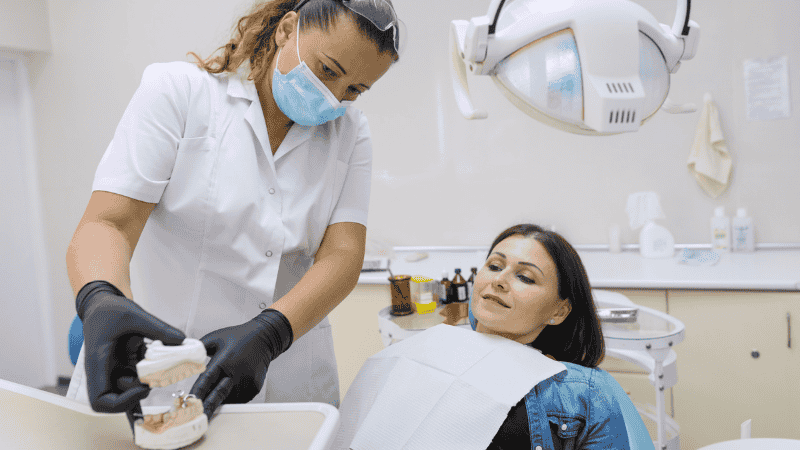
Dental bridges attach artificial teeth to your natural teeth on either side of the gap. They don’t require surgery or bone integration, making them suitable if implants pose too much risk.
Removable partial dentures replace multiple missing teeth using a framework that clips onto existing teeth. You can take them out for cleaning, and they cost less than implants or bridges.
Complete dentures replace all teeth in an arch and rest on your gums. Modern versions fit more securely than older designs and work well if you’re missing most or all of your teeth.
| Option | Surgery Required | Bone Needed | Average Lifespan |
| Dental Implants | Yes | Yes | 20+ years |
| Bridges | No | No | 10-15 years |
| Partial Dentures | No | No | 5-10 years |
| Complete Dentures | No | No | 5-7 years |
Your dentist can help you compare tooth replacement options based on your budget, health status, and lifestyle needs.
Frequently Asked Questions
Smokers face lower success rates and higher complication risks with dental implants, but quitting even temporarily around surgery can significantly improve outcomes.
The timing of when you resume smoking and how much you smoke both play important roles in whether your implants heal properly.
What is the success rate of dental implants for people who smoke?
If you smoke, your dental implants have roughly an 85-90% success rate over five years compared to over 95% for non-smokers.
Light smokers who use fewer than 10 cigarettes per day typically see success rates around 90-95%.
Heavy smokers face the greatest risk. The more you smoke, the lower your chances of successful implant integration become.
Former smokers who quit before surgery can achieve success rates close to non-smokers. This shows that smoking cessation can significantly improve implant outcomes.
How much does smoking increase the risk of dental implant failure?
Smoking raises your risk of implant failure by a substantial margin. Heavy smokers experience failure rates that are roughly two to three times higher than non-smokers.
The chemicals in cigarettes reduce blood flow to your gums and jaw. This makes it harder for bone to grow around the implant properly.
Nicotine causes blood vessels to narrow, which limits oxygen and nutrients reaching the surgical site. Carbon monoxide and other toxins further interfere with healing and bone formation.
When is it safe to start smoking again after dental implant surgery?
You should avoid smoking for at least two to eight weeks after your implant surgery. The longer you can stay smoke-free, the better your chances of success.
The first two weeks are especially critical for initial wound healing. During this time, your soft tissue needs to close properly around the implant.
The eight-week mark covers the early bone formation phase called osseointegration. This is when your jawbone begins growing around the implant to hold it in place.
Understanding the recommended smoking cessation timeline helps you plan for the best possible outcome.
Can occasional or light smoking still affect implant healing and stability?
Yes, even light or occasional smoking can harm your implant healing. Any amount of tobacco use reduces blood flow and weakens your immune response at the surgical site.
Light smokers do have better outcomes than heavy smokers. But you still face higher complication risks compared to people who don’t smoke at all.
Each cigarette you smoke constricts your blood vessels for hours. This means even occasional smoking during the healing period can disrupt the bone integration process.
Do options like All-on-4 implants work well for smokers?
All-on-4 and other full-arch implant solutions can work for smokers, but you need careful planning and strict pre- and post-surgical protocols. These procedures replace an entire arch of teeth using four or more implants.
Smokers considering full-mouth implants face the same healing challenges as with single implants. Your dentist may recommend additional preparation steps like periodontal treatment before surgery.
Advanced treatment options for smokers often include more frequent follow-up visits and closer monitoring for infection or bone loss.
Success depends heavily on your commitment to quitting during the critical healing phase.
Does smoking after implant surgery raise the risk of dry socket or infection?
Yes, smoking after implant surgery significantly increases your risk of infection and healing complications. The toxins in cigarette smoke create an environment where bacteria thrive and your body’s defenses weaken.
Dry socket is more common with tooth extractions than implants, but smokers still face delayed wound healing. Your surgical site may not close properly, leaving the implant exposed to bacteria.
Continuing to smoke after dental implant placement raises your long-term risk of peri-implantitis, a serious infection that causes bone loss around the implant.
This condition can eventually lead to implant failure even years after your surgery.