
Dental implant surgery can make you feel nervous or cause dental anxiety, especially if you worry about pain or staying still for a long time. You may wonder if sedation dentistry is truly safe or if it adds risk to the procedure.
Sedation dentistry is safe for implant surgery when a trained team screens you carefully, monitors you closely, and matches the sedation type to your health needs.
Dentists use clear safety steps, modern equipment, and proven medications to help you stay calm and comfortable during treatment.
When you understand how sleep dentistry sedation works and what safeguards protect you, you can feel more confident about moving forward with dental implant surgery.
Knowing your options helps you make a choice that fits your comfort level and medical history.
Key Takeaways
- Sedation for dental implant surgery is safe when providers follow strict screening and monitoring steps.
- Different sedation options help match your comfort level and health needs.
- Proper planning and recovery steps support a smooth implant experience.
Book a consultation to learn which sedation option fits your dental implant procedure.
Table of Content
- Sedation Options Used in Dental Implant Procedures
- Why Sedation Is Needed for Dental Implants
- Safety Protocols and Monitoring During Sedation
- Preparing for and Recovering From Sedation in Implant Surgery
- Choosing the Right Sedation for Your Needs
- Frequently Asked Questions
Sedation Options Used in Dental Implant Procedures
You have several safe and proven sedation options for dental implant surgery. Each method controls pain and dental anxiety in a different way, from mild relaxation to full unconsciousness.
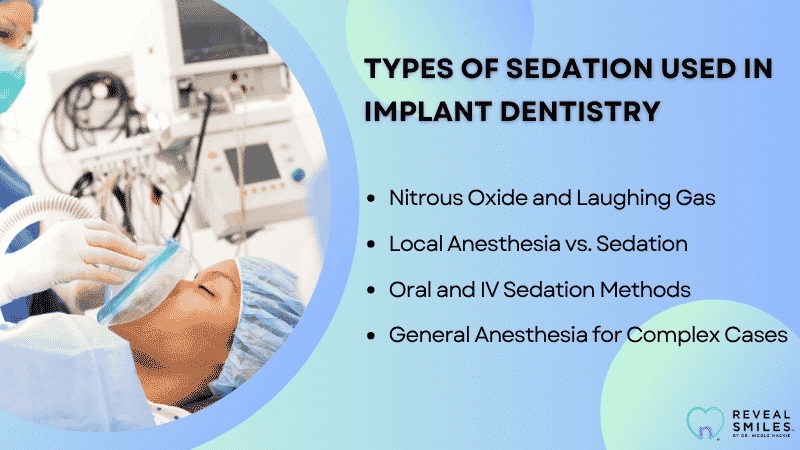
Nitrous Oxide and Laughing Gas
Nitrous oxide, often called laughing gas, is one of the most common tools in sedation dentistry. You breathe it in through a small mask placed over your nose.
It creates mild conscious sedation. You stay awake and can answer questions, but you feel calm and less aware of stress. Many patients describe a light or warm feeling.
Dentists often use nitrous oxide for shorter or simple implant procedures. It works quickly and wears off within minutes after the mask comes off. In most cases, you can drive yourself home.
Nitrous oxide works well for patients with mild anxiety. Your dentist still uses local anesthesia to numb the implant site, so you should not feel pain during surgery.
Local Anesthesia vs. Sedation
Local anesthesia and sedation are not the same. Local anesthesia numbs the exact area where the implant goes. You stay fully awake and aware.
Sedation dentistry focuses on your comfort and anxiety level. It relaxes your body and mind but does not replace numbing medicine.
Many implant procedures use both. Your dentist injects local anesthesia to block pain. Then they add a sedation option if you feel nervous.
Some offices explain this difference clearly when discussing IV sedation and local anesthesia for dental implants. If you only need one implant and feel calm, local anesthesia alone may be enough.
If you fear dental treatment or need multiple implants, adding sedation can help you stay relaxed and still.
Oral and IV Sedation Methods
Oral sedation involves taking prescribed oral sedatives before your appointment. These pills create moderate sedation, meaning you feel drowsy but remain awake.
You may not remember much about the procedure. However, you can still respond to simple instructions. Because the effects last for several hours, you must arrange a ride home.
IV sedation, also called intravenous sedation, works faster. Your dentist places a small line in your arm or hand and delivers medication directly into your bloodstream.
This method allows deeper relaxation and better control of the dose. Many practices note that IV or oral sedation can ease anxiety during implant surgery.
With IV sedation, you often feel like you slept through the procedure, even though you remain in a form of conscious or deep sedation.
General Anesthesia for Complex Cases
General anesthesia places you in a fully unconscious state. You do not respond to sounds or touch.
Dentists reserve this option for complex cases, such as full mouth implants or major bone grafting. It may also help patients with severe dental fear.
A trained professional carefully monitors your breathing, heart rate, and blood pressure during treatment. Because this is the deepest type of sedation, it carries more risk than mild or moderate sedation.
Many dental providers explain that general anesthesia is typically used for extensive implant surgeries. Recovery takes longer, and you will need someone to drive you home and stay with you for a period of time.
Schedule a sedation dentistry consultation for dental implants in Las Vegas, NV today.
Why Sedation Is Needed for Dental Implants
Dental implant placement takes time and focus. Sedation helps you stay calm, control pain, and support safe, steady treatment from start to finish.
Managing Dental Anxiety and Phobia
Many people feel nervous about dental implants. If you have dental anxiety or dental phobia, even the sound of tools can raise your stress level.
Sedation for dental implants helps lower fear before and during treatment. Mild options like nitrous oxide can create anxiolysis, which means you feel relaxed but stay awake.
Many dentists consider nitrous oxide one of the safest sedation options for implant procedures because it has mild effects and wears off quickly.
If your anxiety runs deeper, your dentist may suggest oral sedation or IV sedation. These options help you stay calm and reduce memory of the procedure.
When you feel relaxed, your body stays more stable. Your breathing slows, your muscles loosen, and you are less likely to move suddenly during implant placement.
Supporting Surgical Precision and Comfort
Dental implant surgery requires careful planning and steady hands. Your dentist must place the implant at the right angle and depth to support the final crown.
Sedation for implant surgery helps you stay still. Even small movements can affect accuracy during drilling and placement.
Implant surgery can last one to two hours, sometimes longer. The goal is not deep sleep but safe and controlled treatment. Proper sedation supports comfort while allowing the dentist to work as planned.
You also feel less discomfort from pressure and vibration. Local anesthesia blocks dental implant pain, and sedation reduces awareness of the procedure.
Together, these tools improve your experience and help the dentist focus on precise implant placement.
Benefits for Long or Multiple Implant Cases
Some cases involve multiple implants or full-arch treatment. These visits can take several hours.
Sitting with your mouth open for long periods can strain your jaw and neck. Sedation dentistry helps your muscles relax, which lowers fatigue.
If you need several implants in one visit, sedation allows your dentist to complete more work safely.
Key benefits of sedation dentistry in complex cases include:
- Reduced anxiety during long visits
- Less awareness of time
- Fewer breaks during surgery
- Improved comfort with multiple injections
When you stay relaxed, your dental team can focus on placing each implant carefully and efficiently.
Visit our Las Vegas, NV dental office to discuss safe sedation options for implant surgery.
Safety Protocols and Monitoring During Sedation
Your dental team follows clear sedation protocols to lower risk during implant surgery. They screen your health, monitor your vital signs in real time, and prepare for emergencies before they begin.
Patient Screening and Medical Assessment
Your safety starts with a detailed health review. The sedation dentist asks about heart disease, lung problems, sleep apnea, diabetes, and past reactions to anesthesia.
You also list all medications, vitamins, and supplements. Blood thinners, opioids, and anti‑anxiety drugs can change how your body responds to sedation dentistry for implants.
The team may check your blood pressure, heart rate, and oxygen level before the procedure. In some cases, they request medical clearance from your physician.
Clear screening reduces avoidable risk. It also helps your provider choose the right level of sedation for you.
Vital Sign Monitoring and Emergency Readiness
During implant surgery, the team tracks your vital signs without pause. Continuous monitoring supports strong sedation safety.
Common tools include:
- Pulse oximetry to measure blood oxygen
- Capnography to track breathing and carbon dioxide levels
- Blood pressure cuff at set intervals
- Heart rate and rhythm monitoring
Capnography helps detect slow or blocked breathing early. Pulse oximetry shows drops in oxygen before they become severe.
Emergency equipment stays within reach. This includes oxygen, suction, airway tools, a defibrillator, and emergency drugs. Staff check this equipment on a set schedule.
One trained person focuses only on you when you receive moderate or deep sedation. That person does not assist with the implant itself.
Role of the Sedation Dentist and Anesthesia Team
Your care team’s training plays a key role in sedation safety. A sedation dentist must complete formal education in airway management and emergency response.
Some offices bring in an anesthesiologist or a CRNA to manage deeper sedation. In that case, the anesthesia provider handles your sedation while the dentist places the implant.
For moderate sedation, a designated team member monitors you the entire time. For deep sedation or general anesthesia, the monitoring provider has no other duties.
Many teams maintain BLS, ACLS, or PALS certification, depending on the patient’s age. They also complete regular continuing education in resuscitation skills.
This clear division of roles allows your providers to focus on both precise implant placement and safe sedation at the same time.
Preparing for and Recovering From Sedation in Implant Surgery
You can lower stress and reduce risks when you plan ahead and follow clear recovery steps. Simple actions before and after dental implant surgery help your body heal and keep you safe.
Steps to Take Before Your Procedure
Start preparing for sedation as soon as your dentist schedules your implant surgery. Share your full medical history, including heart issues, breathing problems, and all medications you take.
Follow fasting rules exactly. If you receive oral sedation or IV sedation, your dentist may ask you to stop eating or drinking for several hours before your visit.
Arrange for a trusted adult to drive you home. Sedatives such as midazolam can slow your reflexes and affect your memory for several hours.
Wear loose, comfortable clothes. Avoid alcohol the day before surgery, and do not smoke.
Bring a list of your medications with you. Clear communication helps your dental team monitor you closely and adjust sedation as needed.
Aftercare and Recovery Expectations
You may feel sleepy, dizzy, or slightly confused after sedation. These effects can last several hours, especially with oral medication or IV drugs.
Plan to rest for the rest of the day. Do not drive, sign legal papers, or use heavy equipment.
Common short-term effects include:
- Mild nausea
- Dry mouth
- Slower reaction time
- Limited memory of the procedure
Your dentist will give you written instructions about eating, drinking, and taking pain medicine. Follow them closely to support healing around the implant site.
Call your dentist if you have trouble breathing, severe vomiting, chest pain, or unusual swelling. Most patients recover smoothly when they rest, stay hydrated, and follow clear aftercare steps.
Choosing the Right Sedation for Your Needs
You have several sedation options for dental implants, and each one fits a different level of anxiety, health history, and treatment plan. The safest choice depends on how your body responds to medication and how complex your implant surgery will be.
Tailoring Sedation to Medical and Personal Factors
Your sedation dentist will match the type of sedation to your medical history and comfort level. This step keeps sedation dentistry both safe and effective.
For mild anxiety and short visits, many patients choose nitrous oxide. It works quickly and wears off fast, which is why many providers consider it one of the safest sedation options for implant procedures.
If you feel moderate anxiety, your dentist may suggest oral sedation. You take a pill before the visit, and you stay awake but relaxed. You will need someone to drive you home.
For longer or more complex surgery, such as multiple implants or bone grafting, your provider may discuss IV sedation or general anesthesia.
These options require stricter sedation protocols and close monitoring of your heart rate, blood pressure, and oxygen levels.
Be honest about:
- Heart or lung conditions
- Sleep apnea
- Current medications
- Past reactions to anesthesia
- Pregnancy status
These details guide your provider in choosing the safest sedation plan for you.
Questions to Discuss With Your Provider
Clear communication helps you feel prepared and confident. Ask direct questions so you understand how your sedation dentistry plan will work.
Start with safety. Ask who will administer the sedation and what training they have. You can also ask how they monitor vital signs during implant surgery and what emergency equipment they keep on site.
Next, ask about recovery. Find out:
- How long the effects will last
- When you can eat and drink
- When you can return to work
- Whether you will need a driver
Finally, confirm the exact sedation option planned for your implant procedure and why it fits your needs. When you understand the reasoning, you can move forward with more confidence.
Frequently Asked Questions
You have clear options when it comes to sedation for dental implant surgery. Your dentist will match the method to your health, comfort level, and the length of your procedure.
What types of sedation are commonly used during dental implant surgery?
Dentists use local anesthesia for every implant surgery. It numbs the area so you do not feel pain.
They may also offer oral sedation, IV sedation, or general anesthesia.
Oral sedation comes as a pill you take before your visit. IV sedation goes into a vein and works quickly. General anesthesia makes you fully unconscious.
Will I be completely asleep during a dental implant procedure?
You will not always be fully asleep. Many people stay awake but feel very relaxed with oral or IV sedation.
If you choose general anesthesia, you will be completely unconscious during surgery. A trained anesthesia provider will monitor your breathing and vital signs the entire time.
Your dentist will explain which level of sedation you will receive before the procedure.
How do dentists decide whether IV sedation or local anesthesia is right for me?
Your dentist will review your medical history first. They will ask about heart conditions, breathing issues, medications, and past reactions to anesthesia.
They will also consider your anxiety level and how complex your surgery will be.
Simple cases may only need local anesthesia. Longer or more complex surgeries may call for IV sedation.
How long does a typical dental implant surgery take from start to finish?
A single dental implant often takes about one to two hours. The exact time depends on the number of implants and whether you need extra procedures, such as bone grafting.
Full-arch or multiple implant surgeries can take several hours. Your dentist will give you a time estimate during your treatment planning visit.
Can I drive myself home after dental implant surgery with sedation?
You should not drive yourself home if you receive oral sedation, IV sedation, or general anesthesia. These medications can slow your reflexes and affect your judgment for several hours.
Arrange for a trusted adult to drive you to and from your appointment. If you only receive local anesthesia, your dentist may allow you to drive, but always confirm this ahead of time.
What should I expect to feel during and right after sedation for implant surgery?
During the procedure, you will feel pressure but not sharp pain. Sedation helps you stay calm and relaxed.
Afterward, you may feel sleepy or groggy for a few hours. Some people remember very little about the procedure, especially with IV sedation.
Mild swelling and soreness are normal once the numbness wears off. Your dentist will give you clear aftercare steps to manage discomfort and support healing.