
Your smile matters, but choosing between dental work options can feel confusing. Veneers improve existing teeth while implants replace missing ones, and picking the right choice depends on your specific needs.
Many people mix up these two treatments because they both help create better smiles.
The main difference is that dental implants replace teeth from the root up when a tooth is missing, while veneers are thin covers placed over the front of your existing teeth to fix color, shape, or minor damage.
This means you need to look at whether you still have the tooth in question or if it’s already gone. Your budget, how long you want the solution to last, and what problems you’re trying to fix all play a role in the decision.
Understanding what each option does will help you talk to your dentist about the best path forward. Both treatments can give you a confident smile, but they work in completely different ways and solve different problems.
Key Takeaways
- Veneers cover existing teeth to fix appearance issues while implants replace missing teeth entirely
- Your choice depends on whether you have a tooth to work with or need a complete replacement
- Both options require different care routines and have different costs and lifespans to consider
Table of Content
- Key Differences Between Veneers and Dental Implants
- Understanding the Procedures
- Comparing Cost, Longevity, and Function
- Scenarios and Tooth Replacement Options
- Maintaining Results and Oral Health
- Making the Best Choice for Your Smile
- Frequently Asked Questions
Key Differences Between Veneers and Dental Implants
Dental implants and veneers solve different dental problems and work in completely different ways.
Implants replace missing teeth by anchoring into your jawbone, while veneers cover the front surface of existing teeth to improve their appearance.
Purpose and Indications
Dental implants are designed to replace missing teeth from the root up. If you’ve lost a tooth due to injury, decay, or gum disease, an implant can fill that gap and restore your ability to chew and speak normally.
They work as permanent tooth replacements that look and function like your natural teeth.
Veneers serve a different purpose focused on cosmetic improvement. You need veneers when your existing teeth are discolored, chipped, slightly misaligned, or have gaps between them.
They’re thin shells that bond to the front of your teeth to change their color, shape, or size. You can’t use veneers to replace missing teeth because they need a natural tooth structure to attach to.
The key difference between dental implants and veneers is that implants address tooth loss while veneers enhance teeth you already have.
How Each Treatment Works
A dental implant involves placing a titanium post into your jawbone through surgery. This post acts as an artificial tooth root.
After your jawbone heals around the implant over several months, your dentist attaches an abutment and then a custom crown on top. The process typically takes three to six months from start to finish.
Veneers require much less time and no surgery. Your dentist removes a small amount of enamel from the front of your tooth, usually less than a millimeter.
They then take impressions and bond the custom-made veneer to your tooth surface. Most people complete the veneer process in two to three visits over a few weeks.
Suitability and Candidacy
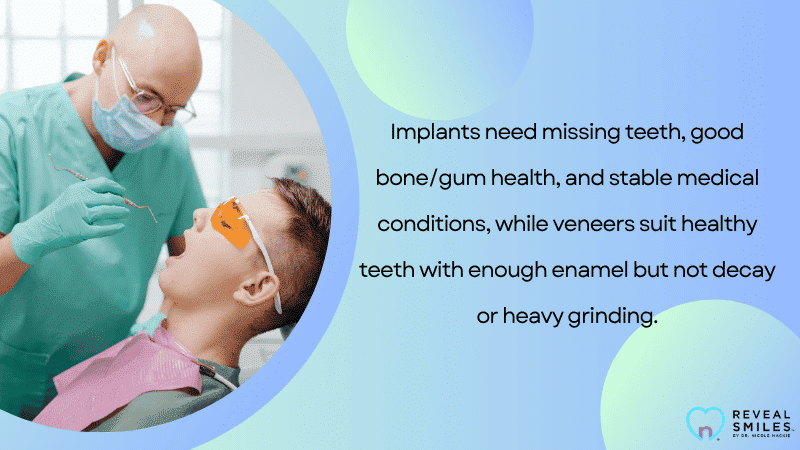
You’re a good candidate for dental implants if you have one or more missing teeth and enough jawbone to support the implant.
Your gums need to be healthy, and you shouldn’t smoke heavily since it affects healing. People with uncontrolled diabetes or who’ve had radiation therapy to the jaw area may not qualify for implants.
Veneers work best when your teeth are generally healthy but have cosmetic issues. You need enough natural tooth enamel for the veneer to bond properly.
If you grind your teeth severely at night or have significant tooth decay, veneers might not be your best smile restoration option. Your dentist will evaluate whether your teeth can support veneers based on their current condition.
Understanding the Procedures
Veneers require minimal tooth preparation and can be completed in a few visits, while dental implants involve surgical placement of a titanium post and a healing period that can take several months.
Veneer Process Step by Step
Your dentist will first remove a thin layer of enamel from your tooth surface, usually about 0.5 millimeters. This creates room for the veneer to fit naturally without looking bulky.
Next, they’ll take impressions of your prepared teeth. These molds are sent to a dental lab where technicians craft your custom veneers. You’ll wear temporary veneers for about 1-2 weeks while the permanent ones are made.
During your final visit, your dentist will clean your teeth and use a special cement to bond each veneer to your tooth. They’ll use a light to harden the adhesive quickly. The whole process from start to finish typically takes 2-3 weeks.
Your dentist may recommend a night guard if you grind your teeth. This protects your veneers from damage while you sleep.
Dental Implant Procedure Overview
An oral surgeon will place a titanium post into your jawbone where your tooth is missing. This implant surgery usually takes 1-2 hours per implant and requires local anesthesia or sedation.
If your jawbone isn’t thick enough, you may need a bone graft first. This adds extra bone material to strengthen the area before implant placement.
After surgery, osseointegration begins. This is when your jawbone grows around and fuses with the titanium post. It takes 3-6 months for the implant to fully integrate with your bone.
Once healing is complete, your dentist attaches an abutment to the implant. This connector piece holds your final crown. After your gums heal around the abutment for about 2 weeks, your custom crown is attached to complete the process.
Recovery Time and Aftercare
Veneer recovery time is minimal. You might have slight sensitivity for a few days, but most people return to normal activities immediately. You can eat soft foods right away and resume your regular diet within 24 hours.
Implant surgery requires more recovery time. Expect swelling and discomfort for 3-7 days after the procedure. You’ll need to stick to soft foods for at least a week while the surgical site heals.
During implant recovery, you should:
- Take prescribed pain medication as directed
- Apply ice packs to reduce swelling
- Avoid hard or crunchy foods for several weeks
- Keep the area clean with gentle rinsing
Most people return to work within 1-2 days after implant placement. However, the full healing process takes several months before your final crown is placed.
Visit our office in Las Vegas, NV to learn more about veneers and dental implant solutions.
Comparing Cost, Longevity, and Function
Veneers cost between $2,000 and $3,000 per tooth, while dental implants cost ranges from $2,700 to $6,000 per tooth. Veneers typically last 10-15 years, whereas implants can last a lifetime with proper care.
Veneers Cost Factors
You’ll pay $2,000 to $3,000 per tooth for veneers. Porcelain veneers cost more than composite resin options, but they resist stains better and look more natural.
The price includes your consultation, tooth preparation, and final placement. Prepless veneers sometimes cost slightly more because they require advanced techniques.
Your total investment depends on how many teeth you want to enhance.
Insurance rarely covers veneers since they address cosmetic concerns. You might find financing options that let you spread payments over several months. Treatment takes just 2-3 weeks from start to finish.
Dental Implants Cost Breakdown
The dental implant cost includes three main parts: the titanium post, abutment, and crown. You’re looking at $2,700 to $6,000 for a single tooth replacement.
Additional procedures can increase your total cost. Bone grafting adds $300 to $3,000 if you don’t have enough jawbone. The dental implant process spans 3-6 months due to healing time.
Your insurance might cover part of the implant cost if you lost teeth from injury or disease. Implants restore function completely, including full chewing function that matches natural teeth.
This makes them worth the higher initial investment for many patients.
Durability and Lifespan of Each Option
Porcelain veneers typically last 10-15 years with good care. Your habits affect how long veneers last. Grinding your teeth or chewing ice can shorten their lifespan.
Dental implants offer superior longevity. The titanium post can last your entire life once it fuses with your jawbone. The crown portion might need replacement after 15-20 years from normal wear.
Both options need daily brushing and flossing. Regular dental checkups help catch problems early. Night guards protect veneers if you grind your teeth while sleeping.
Scenarios and Tooth Replacement Options
Different dental problems need different solutions, and knowing when to use implants, veneers, or other options helps you get the treatment that fits your situation.
The choice depends on whether your teeth are present, how many need work, and what your goals are for appearance and function.
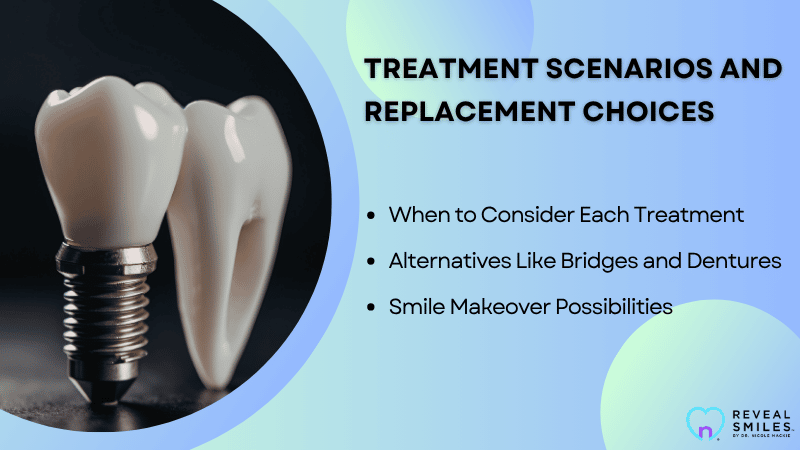
When to Consider Each Treatment
Dental implants work best when you have one or more missing teeth or a tooth that cannot be saved. They replace the entire tooth from root to crown and give you strong chewing power.
You need healthy gums and enough jawbone to support the implant post.
Dental veneers are the right choice when your teeth are present but you want to fix cosmetic issues like stains, chips, gaps, or slight crookedness.
Porcelain veneers typically last longer than composite veneers but cost more. Composite veneers can be placed in a single visit while porcelain versions require lab work.
You might get temporary veneers while waiting for your permanent ones to be made. If you have a badly damaged tooth, your dentist may suggest an implant instead of trying to veneer a weak tooth that might fail later.
Alternatives Like Bridges and Dentures
A bridge can replace one or more missing teeth by attaching crowns to the teeth on either side of the gap. This option costs less than implants and works faster, but it requires drilling down healthy neighboring teeth.
Dentures are removable tooth replacement options that can be full or partial. A partial denture clips onto remaining teeth to fill gaps when you still have some natural teeth left.
Full dentures replace all teeth in an upper or lower arch.
All-on-4 and all-on-6 are advanced options that use four or six implants to support a full arch of replacement teeth. These smile solutions work well when you have lost most or all teeth in one jaw and want a fixed option instead of removable dentures.
Smile Makeover Possibilities
A smile makeover often combines different treatments to address multiple problems at once. You might get an implant to replace a missing back tooth while placing porcelain veneers on your front teeth to improve color and shape.
Some people need implants in the back for chewing strength and veneers in the front for appearance. Others might use a bridge for one gap and veneers on adjacent teeth to make everything blend together.
Your dentist can create a treatment plan that mixes tooth replacement options based on your budget, timeline, and goals.
The key is matching each tooth’s condition with the right solution rather than trying to use one treatment for everything.
Maintaining Results and Oral Health
Both veneers and implants need proper care to stay in good condition and last as long as possible. Daily cleaning habits and regular dental visits protect your investment and keep your smile healthy.

Care and Maintenance Tips
Brush your teeth twice daily and floss once per day to maintain both veneers and implants. Use a soft-bristled toothbrush and non-abrasive toothpaste to avoid scratching veneer surfaces.
Your cosmetic dentist may recommend special flossing tools or water flossers for cleaning around implants.
Visit your dentist every six months for professional cleanings and checkups. These appointments help catch problems early and remove buildup that regular brushing misses.
Your dental health depends on preventing gum disease, which can damage both natural teeth and implants.
If you grind your teeth at night, wear a night guard to protect veneers from cracking or chipping. Grinding puts excessive pressure on dental work and can cause damage over time.
A custom-fitted guard from your dentist offers better protection than store-bought options.
Avoid biting hard objects like ice, pens, or fingernails. These habits can chip or crack veneers and damage implant crowns. Cut tough foods into smaller pieces instead of biting directly into them.
Protecting Your Investment
Bone preservation matters significantly for dental implants because the titanium post needs healthy jawbone density to stay secure.
Regular dental visits monitor bone health around implants and catch issues before they become serious. Gum disease threatens implant stability, so maintaining healthy gums protects your investment.
Limit staining beverages like coffee, tea, and red wine if you have veneers. While porcelain resists stains better than natural teeth, the bonding material and surrounding teeth can still discolor.
Rinse your mouth with water after consuming dark-colored drinks.
Tell your dentist about any changes you notice, including sensitivity, looseness, or discomfort. Early detection prevents minor issues from becoming expensive repairs.
Your dentist can adjust your care routine based on how your veneers or implants respond over time.
Making the Best Choice for Your Smile
Your dental needs and the condition of your teeth determine whether veneers or implants work best. A professional evaluation helps match the right treatment to your specific situation.
Veneers vs Implants for Different Needs
The choice between veneers vs implants depends on whether your tooth is missing or present. If you have a missing tooth, you need an implant because veneers require an existing tooth to bond to.
An oral surgeon places a titanium post in your jaw where the root used to be, then attaches a crown after healing.
Veneers work when your teeth are present but need cosmetic improvements. They fix stains, chips, gaps, or minor misalignment without major changes to your tooth structure.
A cosmetic dentist bonds thin shells to the front of your teeth to improve their appearance.
Choose implants when:
- A tooth is missing or needs removal
- You need full chewing strength restored
- You want to preserve jaw bone
Choose veneers when:
- All teeth are present but discolored or worn
- You want quick cosmetic improvements
- Your teeth have healthy structure
Consulting With a Dental Professional
Schedule a consultation with a cosmetic dentist or oral surgeon to review your options. They will take x-rays, check your gum health, and examine your bite to recommend the best treatment.
Your dentist can explain the timeline, costs, and what to expect during each step.
Some smile makeovers use both treatments together, placing an implant where a tooth is missing and adding veneers to neighboring teeth for a uniform look.
Your dental team will create a personalized plan that fits your budget and goals. They can also discuss whether you need any preparatory work like gum treatment or bone grafting before starting.
Frequently Asked Questions
Veneers bond to the front of existing teeth to improve their appearance, while implants replace missing teeth with a titanium post in the jawbone. Your choice depends on whether you have a tooth to improve or need to replace one that’s gone.
What’s the main difference between veneers and dental implants?
Veneers are thin shells that cover the front surface of your existing teeth. They change the color, shape, or size of teeth that are already in your mouth.
Implants replace teeth that are missing or need to be removed. A titanium post goes into your jawbone where the root used to be, then a crown attaches on top.
You need a tooth present to get a veneer. Implants create a new tooth from scratch when there’s nothing left to save.
How do I know whether veneers or implants are the better choice for my smile?
Ask yourself if the tooth is still there. If a tooth is missing or needs to come out, an implant restores strength and function from the root up.
If your tooth is healthy but stained, worn, chipped, or slightly crooked, veneers can fix those problems quickly. They work best when you want to change how teeth look without major changes to the structure underneath.
Your dentist will check your gums, bone levels, and bite. These factors help determine which option will last longest and give you the result you want.
What are the pros and cons of veneers compared with dental implants?
Veneers require less time and usually involve no surgery. Most cases finish within a few weeks, and you may only feel brief cold sensitivity afterward.
The downside is that veneers need a strong tooth underneath. If the tooth is badly damaged, cracked, or has a large filling, a veneer may not hold up well.
Implants work like natural teeth and help keep your jawbone healthy. They don’t depend on nearby teeth for support.
The trade-off is that implants take longer because the post needs time to heal in the bone. You’ll have some soreness for a few days after the surgical step, though most people manage it with over-the-counter pain relief.
How much do veneers typically cost compared with dental implants?
Veneers are priced per tooth and depend on the material and design work. Most people pay less per tooth for a veneer than for a full implant.
Implants include multiple parts: the titanium post, the connector piece called an abutment, and the final crown. This makes the total cost higher than a single veneer.
Keep in mind that the best value comes from the option that solves your problem and lasts. Your dentist can give you a breakdown of the timeline and total cost so you can compare both treatments fairly.
Can I get both veneers and dental implants as part of the same treatment plan?
Yes, many patients use both in the same smile makeover. You might need an implant to replace a missing back tooth and veneers on your front teeth to improve color and shape.
This combined approach makes sense when you have different problems in different areas. The implant restores function where you need it, and the veneers create a consistent look across your smile.
Your dentist will plan which treatment goes where based on what each tooth needs. Sometimes you’ll complete the implant first, then add veneers later to match everything perfectly.
How do veneers and implants compare to crowns for fixing damaged or missing teeth?
Crowns cover the entire tooth above the gum line, not just the front like veneers do. If your tooth has a large cavity, crack, or heavy wear, a crown gives more protection than a veneer.
Implants use crowns as the visible part. After the implant post heals in your jaw, a custom crown attaches to complete the tooth.
Veneers change the front surface only and leave the back of the tooth alone. This makes them a good choice when the tooth is mostly healthy and you just want to improve how it looks from the front.